
Stanford Graduates Share Honest Views on Artificial Intelligence's Future Impact
Stanford University alumni reveal their perspectives on AI's potential benefits and risks. Discover what elite graduates think about artificial intelligence's t...
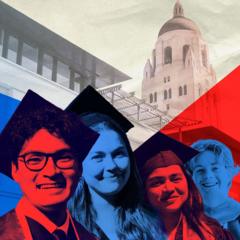
Stanford Alumni Weigh In on Artificial Intelligence's Role
Artificial intelligence Stanford graduates are expressing nuanced perspectives on how AI will shape their careers and society at large. The BBC recently conducted extensive interviews with dozens of alumni from the prestigious Silicon Valley institution, capturing their candid reflections on whether artificial intelligence represents a transformative opportunity or a potential threat to their professional futures.
Mixed Perspectives from Elite Graduates
The conversations revealed that Stanford's accomplished alumni hold remarkably diverse opinions regarding artificial intelligence Stanford graduates' readiness and the broader implications of AI adoption. Some expressed optimism about leveraging AI tools to accelerate innovation and solve complex problems, while others voiced concerns about job displacement and ethical implications that merit careful consideration.
Opportunities and Advancement Potential
Several Stanford graduates highlighted how artificial intelligence could enhance their existing skill sets and create entirely new career pathways. They noted that their Stanford education provided a strong foundation in computational thinking and data science, positioning them advantageously to work alongside AI systems rather than compete against them. These optimists emphasized that understanding AI fundamentals gives them competitive advantages in virtually every industry sector.
Concerns About Job Market Disruption
Conversely, other Stanford alumni expressed legitimate concerns about how rapid artificial intelligence adoption might disrupt traditional career trajectories. They questioned whether entry-level positions would remain available for new graduates if automation accelerates at current rates. This pragmatic perspective acknowledges that while AI creates opportunities, the transition period could prove challenging for workforce adaptation.
The Stanford Education Advantage
Regardless of their stance on artificial intelligence, Stanford graduates consistently acknowledged that their university's comprehensive approach to technology education prepared them to navigate an AI-driven landscape. The institution's emphasis on both technical prowess and ethical considerations has equipped alumni to think critically about implementation strategies and societal impacts.
Interdisciplinary Learning Benefits
Stanford's commitment to interdisciplinary education emerged as a key differentiator in these conversations. Graduates from humanities, business, and engineering backgrounds noted that their diverse perspectives enable them to evaluate artificial intelligence through multiple lenses—considering economic, social, and ethical dimensions simultaneously.
Industry-Specific Implications
The Stanford alumni discussed how artificial intelligence impacts vary dramatically across sectors. In finance and healthcare, AI implementation is accelerating rapidly, creating immediate pressure to adapt. In creative industries, opinions diverge sharply about whether artificial intelligence will augment human creativity or diminish it. Manufacturing and logistics sectors, meanwhile, are experiencing significant workforce transitions as intelligent automation becomes mainstream.
Preparing for AI Integration
When asked about preparation strategies, Stanford graduates recommended continuous learning and skill diversification. They emphasized that understanding AI's capabilities and limitations—rather than mastering every emerging technology—represents the most valuable professional approach. Several highlighted the importance of developing uniquely human skills: critical thinking, emotional intelligence, complex communication, and creative problem-solving.
Lifelong Learning Mindset
The consensus among Stanford alumni is that artificial intelligence will require embracing a lifelong learning mentality. Rather than viewing education as a destination, successful professionals will treat knowledge acquisition as an ongoing process. This perspective aligns closely with Stanford's own educational philosophy emphasizing adaptability and intellectual flexibility.
Broader Societal Concerns
Beyond personal career implications, Stanford graduates expressed thoughtful perspectives on artificial intelligence's societal impact. They discussed concerns about algorithmic bias, data privacy, cybersecurity vulnerabilities, and the concentration of AI development within a limited number of corporations. Many emphasized that responsible AI development requires input from diverse voices and expertise across multiple disciplines.
Ethical Framework Importance
Several Stanford alumni stressed that artificial intelligence advancement must be accompanied by robust ethical frameworks and regulatory oversight. They noted that their university education included significant coursework on technology ethics, artificial intelligence governance, and responsible innovation principles—foundational knowledge they believe should become standard across higher education.
Looking Toward the Future
Overall, the Stanford graduates interviewed by the BBC demonstrated sophisticated understanding of artificial intelligence's complex implications. Rather than adopting extreme positions of either utopian optimism or dystopian pessimism, they articulated balanced perspectives acknowledging both genuine opportunities and legitimate challenges ahead.
The takeaway from these conversations is clear: Stanford's elite graduates view artificial intelligence not as an inevitable force to be passively accepted, but as a transformative technology requiring thoughtful navigation, continuous learning, and commitment to ethical development practices.