
Secret Service Deception Tactics Protect Presidents in Plain Sight
Discover how the US Secret Service uses elaborate deception operations and decoys to protect presidents. Learn about sophisticated security tactics employed in...
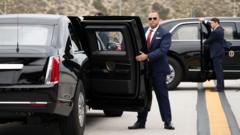
Understanding Secret Service Deception Operations for Presidential Protection
The United States Secret Service employs sophisticated Secret Service deception operations designed to safeguard the nation's sitting presidents through a complex network of misdirection and strategic intelligence work. These multifaceted protective measures operate continuously in public view, yet remain largely invisible to the average citizen. The agency's approach combines traditional surveillance techniques with cutting-edge technology and psychological tactics to anticipate and neutralize potential threats before they materialize.
The fundamental principle behind these security measures rests on the concept that confusion and unpredictability create safety. By implementing Secret Service deception operations, protective details can significantly reduce the vulnerability window that surrounds any high-ranking government official. This layered defense strategy has evolved considerably over decades of experience, adapting to contemporary threat landscapes while maintaining historical wisdom about what works in real-world situations.
The Role of Decoys in Presidential Security Strategy
Decoys represent one of the most effective components within the Secret Service's arsenal of protective tactics. These specially trained individuals serve critical functions in deflecting attention from actual presidents and their movements throughout urban and rural environments alike. Presidential security decoys undergo rigorous training regimens that include physical conditioning, emergency response protocols, and detailed briefings about potential threat scenarios.
The implementation of presidential security decoys creates multiple layers of confusion for would-be adversaries attempting to identify and target sitting presidents. These trained personnel dress in identical or similar attire to the protected individual, utilize vehicles matching those in the official motorcade, and follow predetermined routes that mirror or diverge from the actual presidential pathway. The psychological advantage gained from such tactics cannot be overstated, as potential threats face extraordinary difficulty in determining which motorcade contains the actual president.
Historical Evolution of US President Protection
Throughout American history, US president protection methods have continuously adapted to address emerging threats and technological advancement. The Secret Service, formally established in 1865 following the Civil War, initially focused on counterfeiting prevention before transitioning to presidential security following President William McKinley's assassination in 1901. This pivotal moment transformed protective protocols from theoretical concepts into essential operational frameworks.
The evolution of US president protection reflects broader societal changes and threat assessments. Early twentieth-century approaches relied heavily on uniformed personnel and visible deterrents, while contemporary methodology emphasizes intelligence gathering, behavioral analysis, and technological monitoring systems. The transition from visible to invisible protection mechanisms represents a fundamental philosophical shift in how government agencies approach presidential safety.
Advanced Secret Service Tactics in Modern Context
Modern Secret Service tactics integrate artificial intelligence, predictive analytics, and real-time threat assessment technology with traditional human intelligence gathering and protective operations. Agents employed within presidential details receive specialized training in threat identification, counter-assault procedures, and emergency medical response protocols. These comprehensive skill sets enable protective personnel to respond effectively to diverse threat categories ranging from hostile individuals to coordinated attacks.
Contemporary Secret Service tactics also encompass extensive planning for routine presidential movements. Every motorcade, public appearance, and private engagement undergoes rigorous advance preparation involving site surveys, personnel briefings, and contingency planning. Security perimeters extend far beyond immediately visible boundaries, with plainclothes agents positioned throughout crowds and unmarked surveillance vehicles monitoring approaches to presidential locations.
Threat Prevention Through Strategic Misdirection
The concept of presidential threat prevention fundamentally relies on making actual presidential locations and movements unpredictable and difficult to ascertain. By maintaining multiple potential routes, utilizing decoy motorcades, and varying official schedules unpredictably, the Secret Service substantially reduces the operational window available to potential attackers. This continuous rotation between actual and false information creates an environment where reliable intelligence becomes extraordinarily difficult for adversaries to obtain.
Presidential threat prevention extends beyond physical security measures into the realm of information control and counterintelligence operations. The Secret Service maintains sophisticated systems for identifying potential threats through social media monitoring, threat assessment analysis, and coordination with international intelligence partners. These intelligence operations work in concert with physical protection measures to create comprehensive defensive systems.
Coordination Between Multiple Agencies and Departments
Effective presidential security requires seamless coordination among numerous federal agencies, state police forces, and local law enforcement entities. The Secret Service maintains liaison offices with the FBI, CIA, Department of Homeland Security, and military intelligence branches to ensure comprehensive threat awareness and coordinated response capabilities. This inter-agency cooperation creates redundant protective layers that collectively exceed what any single organization could accomplish independently.
Presidential visit preparations typically involve hundreds of personnel working in coordinated fashion across multiple jurisdictions and time zones. Local law enforcement agencies receive detailed briefings about security protocols, operational requirements, and emergency procedures specific to presidential movements through their communities. This extensive preparation ensures that even seemingly routine presidential appearances involve sophisticated protective operations.
The Balance Between Security and Public Access
American presidents must maintain a delicate equilibrium between personal security requirements and democratic principles emphasizing public accessibility to elected officials. The Secret Service must accomplish protective objectives while permitting presidents to fulfill constitutional responsibilities requiring public engagement and appearance. This balancing act has become increasingly challenging as threat landscapes evolve and technology enables new categories of attacks.
The deception operations and protective tactics employed by the Secret Service operate silently, allowing presidents to conduct public business while remaining substantially safer than would otherwise be possible. Through carefully orchestrated misdirection, strategic intelligence gathering, and coordinated agency cooperation, the Secret Service has maintained an operational record characterized by effectiveness in preventing attacks against sitting presidents. The sophisticated nature of these protective systems ensures that American presidents can function publicly while benefiting from extraordinary protective measures operating largely beyond public awareness and understanding.