
Ukraine Targets Critical Russian Oil Infrastructure in Bold Attack
Ukraine launches significant strike on Russian oil terminal, targeting key infrastructure financing Moscow's military operations in St. Petersburg region.
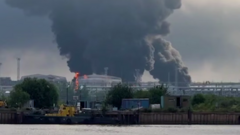
Ukraine Launches Strategic Strike on Russian Oil Terminal
Ukraine has executed a major offensive operation targeting a crucial Russian oil terminal, with President Volodymyr Zelensky confirming the action represents a direct assault on critical infrastructure that sustains Moscow's war economy. The Russian oil terminal attack marks an escalation in Ukraine's strategy to undermine the financial mechanisms supporting Russia's military campaign.
Presidential Confirmation of Military Objective
Ukrainian leadership has officially acknowledged the operation, emphasizing that the targeted facilities represent key infrastructure "that generates revenue for Russia's war." This statement underscores the strategic rationale behind the military action, positioning the strike as an integral component of Ukraine's broader defensive and counter-offensive measures. The operation reflects Kyiv's commitment to disrupting the economic foundations that sustain Russian military operations across multiple theaters.
Strategic Importance of the Target
The Russian oil terminal, situated in the St Petersburg region, holds substantial significance within Russia's energy infrastructure network. Oil terminals serve as critical nodes in the distribution and export systems that generate substantial foreign currency revenue for the Kremlin. By targeting such facilities, Ukraine aims to create disruption within supply chains and reduce the financial capacity available to fund ongoing military expenditures. The strategic value of such infrastructure extends beyond immediate tactical considerations, encompassing longer-term economic impact on Russia's war-financing capabilities.
Impact on Russia's War Economy
Russia's dependence on energy exports, particularly crude oil and petroleum products, represents one of the nation's most significant revenue streams. These financial resources have historically been channeled toward defense budgets and military modernization. By striking critical oil terminal infrastructure, Ukraine seeks to constrain the resources available to sustain extended military operations. The targeting of such economic nodes demonstrates a sophisticated understanding of how modern conflicts extend beyond conventional battlefield engagements to encompass economic and industrial dimensions.
Broader Context of Ukraine's Defense Strategy
The operation fits within Ukraine's evolving military strategy, which increasingly incorporates strikes against Russian logistics, supply lines, and revenue-generating infrastructure. This approach recognizes that disrupting the economic engine powering Russia's war machine constitutes a legitimate military objective. Ukrainian defense officials have consistently articulated this rationale when justifying operations targeting Russian industrial and energy facilities located within Russian territory.
International Implications and Reactions
Strikes on Russian oil terminal facilities carry implications extending beyond bilateral Ukraine-Russia dynamics. Global energy markets remain sensitive to disruptions in Russian oil production and export capabilities. Any significant reduction in available Russian oil supplies influences international petroleum pricing and energy availability in dependent markets worldwide. These broader geopolitical considerations frame the Ukrainian operation within a more expansive international context.
Conclusion
Ukraine's assault on the Russian oil terminal represents a calculated military response targeting the financial infrastructure sustaining Moscow's war effort. President Zelensky's characterization of the targeted Russian oil terminal as key revenue-generating infrastructure underscores the operational logic informing such decisions. As the conflict continues evolving, such operations targeting economic and industrial nodes likely remain central to Ukraine's strategic calculus in its ongoing defensive struggle against Russian aggression.