
Trump's Vision for United Ireland Sparks Atlantic Debate
Trump's comments on Irish unification ignite discussion across Europe and America. Explore the implications of his statement on geopolitics and Irish relations.
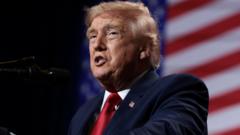
Trump's Unexpected Position on Irish Unification
Former President Donald Trump's recent remarks regarding a united Ireland have become an unexpected focal point in contemporary political discourse. Trump's perspective on Irish unification has generated substantial debate among analysts, political observers, and international commentators, particularly those monitoring transatlantic political developments.
The emergence of Trump's comments about Ireland's potential reunification represents a notable departure from typical American political discourse on British-Irish relations. This intervention into a traditionally sensitive geopolitical matter signals a shifting approach to how American political figures engage with historical territorial questions across the Atlantic.
Unexpected Nature of Global Headlines
The prominence of Trump's unified Ireland commentary in today's news cycle demonstrates the unpredictability of contemporary political messaging. When major international figures address long-standing constitutional questions with fresh perspectives, media outlets and political analysts immediately scrutinize their motivations and implications.
What makes this development particularly noteworthy is the global reach of Trump's statement and its resonance beyond typical political circles. The comment appears carefully calibrated to generate interest across multiple constituencies, suggesting strategic communication targeting international audiences.
Potential Audience Across the Atlantic
Trump's commentary on Irish unification arguably presents multi-layered messaging designed to resonate with specific demographics on both sides of the Atlantic. The statement appears tailored to appeal to Irish-American communities in the United States, who represent a significant voting bloc and cultural constituency with historical ties to Irish independence movements and reunification aspirations.
Simultaneously, Trump's remarks demonstrate awareness of Irish and British political sensitivities regarding constitutional arrangements. By addressing Irish unification directly, the former president engages with nationalist sentiments in Ireland while potentially signaling a distinctive American perspective on European territorial matters.
International Relations Dimensions
Trump's position on Irish unification intersects with broader questions about American engagement with historical European conflicts and constitutional arrangements. Traditionally, American presidents maintain careful neutrality on matters perceived as internal to British-Irish relations, reflecting diplomatic conventions established during decades of conflict resolution efforts.
The breaking of this implicit silence through Trump's commentary raises questions about the strategic objectives behind his statement. Whether intended to strengthen connections with Irish voters, differentiate his political brand through unconventional positions, or genuinely reflect substantive views on Irish sovereignty, the statement accomplishes visible agenda-setting in international news coverage.
Reception and Analysis
Media outlets and political analysts have devoted considerable attention to deconstructing Trump's message about Irish reunification. The statement has generated diverse interpretations across different political communities, with supporters viewing it as authentic engagement with Irish aspirations and critics questioning whether it represents substantive policy commitment or calculated political messaging.
Academic observers and foreign policy experts recognize the comment within the context of evolving American engagement with traditionally European political questions. As American domestic political discourse becomes increasingly globalized, figures like Trump employ international references as rhetorical strategies with multiple intended audiences.
Implications for Future Discourse
Trump's willingness to address Irish unification publicly may establish precedent for American political figures engaging more directly with historical territorial questions across the Atlantic. This approach contrasts with traditional diplomatic restraint and potentially encourages other American politicians to stake positions on European constitutional matters.
The resonance of Trump's united Ireland commentary demonstrates how contemporary political leaders utilize international affairs as vehicles for domestic political messaging. By invoking Ireland's potential reunification, the former president activates narratives about national self-determination, ethnic identity, and historical justice that carry emotional weight among targeted constituencies.
Conclusion
Trump's recent comments regarding Irish unification represent an unanticipated intrusion of American political leadership into traditionally sensitive transatlantic territorial questions. The strategic deployment of this commentary across both American and European audiences illustrates modern political communication's sophisticated targeting capabilities. As global politics increasingly intertwine domestic and international messaging, Trump's position on Irish reunification exemplifies how contemporary political figures navigate complex geopolitical landscapes while addressing multiple constituencies simultaneously.