
Trump's Shadow Shapes NATO Strategy on European Rearmament
NATO confronts urgent defense challenges amid Trump's divisive rhetoric on European rearmament. Security experts analyze implications for alliance unity.
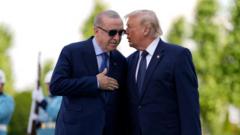
Trump's Divisive Presence Complicates NATO Rearmament Efforts
As NATO navigates the complex challenge of bolstering European rearmament, the specter of American political uncertainty looms over deliberations at this pivotal gathering. The Trump administration's contentious statements have fundamentally altered the tenor of discussions surrounding NATO European rearmament, introducing an element of unpredictability that member nations must carefully consider.
The transatlantic alliance faces unprecedented pressure to strengthen military capabilities across member states, yet progress remains hampered by provocative rhetoric emanating from Washington. European leaders convened to address urgent security concerns find themselves simultaneously grappling with the implications of American leadership that prioritizes confrontational messaging over consensus-building approaches.
Unity Fractured by Inflammatory Rhetoric
The image of cohesion that NATO seeks to project has been substantially undermined by the US president's inflammatory commentary. Rather than reinforcing the alliance's collective resolve, recent statements have introduced discord precisely when Europe requires reassurance regarding American commitment to mutual defense obligations.
Security analysts observe that this period represents a critical juncture for European nations. The necessity to strengthen military infrastructure cannot be postponed, yet the unpredictable nature of American policy positions creates strategic uncertainty. Member states now must develop contingency plans that account for potential shifts in US foreign policy orientation.
Strategic Implications for European Defense Capabilities
NATO European rearmament initiatives face multifaceted obstacles beyond traditional budgetary constraints. Defense ministers recognize that credible deterrence requires not merely increased military spending, but genuine interoperability and coordinated strategic planning among alliance members. The current political environment complicates these foundational requirements.
European nations traditionally relied upon American security guarantees and technological superiority. This arrangement, while economically advantageous, created dependencies that member states now urgently wish to address. Paradoxically, the very American unpredictability that motivates greater European military independence simultaneously destabilizes the financial and logistical frameworks necessary for sustained rearmament programs.
Economic Realities of Defense Investment
Substantial increases in defense expenditure represent considerable commitments for European economies. Many nations must redirect resources from social programs and infrastructure investment toward military modernization. The political consequences of these choices create domestic pressures even as international security threats intensify.
NATO members recognize that credible deterrence demands synchronized military capabilities. This requirement necessitates coordinated procurement decisions, standardized training protocols, and integrated command structures. Trump's unpredictable approach to alliance commitments introduces uncertainty into these long-term planning horizons.
The Challenge of Building European Defense Autonomy
European leaders increasingly acknowledge that greater military self-sufficiency represents an essential strategic objective. However, developing genuinely independent defense capabilities requires sustained investment, technological advancement, and institutional development. These processes typically demand decades of consistent commitment.
The current juncture offers both opportunity and danger. Heightened security concerns galvanize political will for increased defense spending, yet American uncertainty creates questions regarding the appropriate scale and orientation of European military development. Nations must balance the desire for reduced American dependence against the practical reality that NATO capabilities remain substantially reliant upon American technological platforms and intelligence infrastructure.
NATO's Path Forward Amid Uncertainty
The alliance must navigate a delicate diplomatic terrain. Alliance unity serves all member interests, yet the Trump administration's confrontational messaging undermines consensus-building efforts essential for coordinated NATO European rearmament initiatives. Senior officials struggle to articulate coherent strategies when fundamental assumptions regarding American engagement remain contested.
Security Correspondent Frank Gardner emphasizes that this period represents a watershed moment for transatlantic relations. The choices made regarding European military investment and NATO institutional development during this period will shape alliance dynamics for decades. European nations cannot simultaneously demand American security guarantees while publicly questioning American reliability, nor can they achieve independent deterrent capacity overnight.
Broader Implications for International Stability
The uncertainty surrounding American commitment to NATO extends beyond institutional questions to fundamental strategic calculations. Regional adversaries carefully observe alliance cohesion and member state confidence. Perceptions of NATO weakness or American disengagement invite miscalculation and escalatory behavior.
NATO European rearmament therefore serves purposes extending beyond traditional deterrence frameworks. European military capability directly influences how rival powers calculate potential intervention costs and alliance response thresholds. The current period of American political uncertainty complicates these critical signaling mechanisms.
As NATO members advance rearmament agendas, they simultaneously must manage transatlantic relations with an American administration whose commitments remain unpredictable. This dual challenge defines the security environment for the foreseeable future, requiring sustained diplomatic skill, long-term strategic vision, and remarkable patience from European leadership.