
Trump, Putin & Xi Alliance: Is Europe Losing Global Influence?
Discover how the Trump-Putin-Xi alliance at APEC reshapes global power dynamics. Andy Burnham meets EU leaders amid concerns of Europe's geopolitical decline.
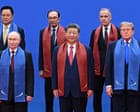
Trump, Putin and Xi Alliance: A New Global Power Dynamic
The Trump-Putin-Xi alliance emerging from recent international forums has sparked significant debate about the future of global geopolitics and Europe's role on the world stage. As these three major powers strengthen their collaborative efforts, questions arise about whether Europe faces a fundamental shift in international influence and authority.
This week, Andy Burnham is actively engaging with Western leaders across Berlin and Brussels, emphasizing the importance of renewed European-UK cooperation and addressing the ongoing Ukraine crisis. Simultaneously, Donald Trump, Vladimir Putin, and Xi Jinping convened at the APEC summit in China, underscoring a parallel diplomatic momentum that has captured international attention.
Understanding the APEC Summit Developments
The convergence of these three leaders at the APEC summit represents a significant moment in contemporary international relations. While the gathering itself follows traditional diplomatic protocols, observers and political analysts are carefully examining whether this represents merely symbolic gesturing or a genuine realignment of global power structures.
The Trump-Putin-Xi alliance discussions at APEC focused on economic cooperation, security arrangements, and regional influence across Asia-Pacific territories. These conversations occur against a backdrop of escalating tensions regarding Ukraine, NATO expansion concerns, and broader questions about Western dominance in international affairs.
Europe's Strategic Response and Diplomatic Initiatives
As the Trump-Putin-Xi alliance gains prominence, European Union officials recognize the critical necessity of strengthening internal cohesion and reinforcing transatlantic partnerships. Andy Burnham's diplomatic mission represents a broader European effort to maintain relevance and influence during this period of potential geopolitical realignment.
The meetings scheduled in Berlin and Brussels emphasize several key priorities for European leadership. First, addressing the Ukraine situation remains paramount, as this conflict directly impacts European security and economic stability. Second, negotiating closer institutional ties with the United Kingdom reflects Europe's commitment to expanding its sphere of influence among developed democracies. Third, coordinating a unified European response to emerging power blocs demonstrates the EU's determination to maintain its seat at the global decision-making table.
Assessing Claims of European Decline
The question of whether Europe genuinely faces a diminishing role in global affairs requires careful analysis beyond surface-level interpretations. While the Trump-Putin-Xi alliance captures headlines, Europe continues to exercise considerable economic power, maintains robust institutional frameworks, and possesses substantial military capabilities through NATO.
However, the emerging alliance between these three leaders cannot be entirely dismissed as mere political theater. Trump's policies favor bilateral relationships and pragmatic economic arrangements, Putin seeks to expand Russian influence amid Western sanctions, and Xi pursues China's status as a leading global power. When these three nations coordinate, the implications for European interests become more complex.
Implications for European Union Strategy
The current geopolitical landscape demands that the European Union reassess its traditional approaches to foreign policy and international engagement. The Trump-Putin-Xi alliance represents a potential challenge to the liberal democratic order that Europe has helped construct and sustain since World War II.
European leaders must simultaneously pursue multiple strategic objectives: strengthening NATO capabilities to address Russian aggression, maintaining transatlantic relationships despite potential U.S. policy shifts, managing economic competition from China, and presenting a unified European voice in international negotiations. These objectives sometimes conflict with one another, requiring sophisticated diplomatic maneuvering.
The Broader Context of Global Power Redistribution
Beyond the immediate implications of the Trump-Putin-Xi alliance, Europe must contend with longer-term trends in global power distribution. Rising economies in Asia, Africa, and Latin America are increasingly demanding greater representation in international institutions. The traditional Western-dominated system is experiencing pressure from multiple directions simultaneously.
The Trump-Putin-Xi alliance may represent an acceleration of this broader trend rather than its initiation. Rising powers are naturally asserting their influence, and older power centers must adapt to these new realities. For Europe, this adaptation requires both defensive measures—protecting existing interests—and innovative strategies for maintaining influence in a multipolar world.
Conclusion: Reality Beyond the Narrative
Whether the Trump-Putin-Xi alliance signals genuine European decline or represents exaggerated media speculation remains partially unclear. What is certain is that the international environment has become more competitive and complex. Europe's response, as exemplified by Burnham's diplomatic efforts and broader EU initiatives, will significantly influence the continent's future geopolitical standing and its ability to shape global outcomes in the decades ahead.