
Trump Backs Irish Unification: 'May as Well Happen Now'
US President Donald Trump expressed support for a united Ireland during his visit to the Republic, saying unification 'may as well happen now.' His remarks spar...
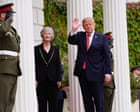
Trump Expresses Support for Irish Unification
During an official visit to the Republic of Ireland, US President Donald Trump declared his support for irish unification, stating he would "love" to witness the island's reunification. His remarks represent a significant diplomatic intervention on a deeply sensitive constitutional matter that has long divided political perspectives across Ireland and the United Kingdom.
The president's unexpected endorsement of the push for constitutional change came at the beginning of a two-day trip to Ireland on Saturday. Trump suggested that since irish unification would "eventually" occur, there seemed little reason to delay the process, framing the matter as an inevitable outcome that might as well materialize in the present rather than the future.
Political Reactions to Trump's Statement
Trump's intervention on the question of irish unification prompted rapid and firm responses from multiple political quarters. The UK government swiftly issued a rebuttal to the president's comments, emphasizing its position on the constitutional status of Northern Ireland. Unionist leaders within Northern Ireland similarly responded with opposition to Trump's statement, defending the current constitutional arrangement.
Constitutional Implications of Irish Unification
The concept of irish unification remains one of the most contentious political issues on the island. The partition of Ireland, established over a century ago, created the Irish Free State, which eventually became the modern Republic of Ireland, while six counties in the north remained part of the United Kingdom. This division has generated decades of political tension, communal division, and complex constitutional questions.
Supporters of irish unification argue that constitutional change would reunite a historically divided nation and resolve longstanding political grievances. They contend that demographic and political shifts have altered the landscape since partition, warranting reconsideration of the island's constitutional future. Conversely, unionists maintain that Northern Ireland's place within the United Kingdom represents the legitimate political choice of its population and should remain unchanged.
International Attention on Irish Constitutional Matters
Trump's public statement regarding irish unification has drawn significant international attention to this domestic Irish matter. The intervention by a sitting US president represents an unusual development in global diplomatic discourse surrounding Irish constitutional questions. Historically, international figures have largely avoided direct commentary on this sensitive issue, recognizing its deeply divisive nature within Irish and British politics.
The president's remarks reflect growing international interest in Irish political developments and demonstrate how global figures may engage with questions of constitutional significance. His statement underscores the broader international dimension of irish unification debates, particularly given the substantial Irish diaspora in the United States and historical US interest in Irish affairs.
The Broader Context of Irish Politics
Irish unification discussions have intensified in recent years, particularly following the Brexit referendum and subsequent political developments. The Good Friday Agreement, signed in 1998, established a framework for peace and included provisions addressing the possibility of irish unification through democratic referendums. This agreement has shaped contemporary discussions about constitutional change on the island.
Contemporary irish unification discourse reflects changing demographics, economic considerations, and political sentiment across the island. Various political parties, civil society organizations, and citizens maintain diverse perspectives on whether constitutional change would benefit Ireland's population or create additional complexities and challenges.
US-Ireland Relations and Diplomatic Engagement
Trump's visit to Ireland and his remarks on irish unification occur within the context of broader US-Ireland diplomatic relations. The United States maintains significant cultural and historical connections with Ireland, reflected in the substantial Irish-American population and longstanding economic ties between the two nations. Presidential visits to Ireland typically focus on strengthening bilateral relationships and celebrating shared cultural heritage.
The president's statements during this particular visit have added a political dimension to what might have otherwise been a predominantly ceremonial diplomatic engagement. His commentary on irish unification suggests that contemporary US foreign policy may engage more directly with internal constitutional matters affecting close democratic allies.