
Tragic Helicopter Collision in Greece Claims Two Lives During Firefighting Operations
A devastating helicopter collision in Greece killed two crew members during firefighting efforts. A British pilot and Greek crew member survived the accident.
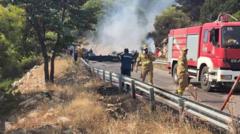
Helicopter Collision Tragedy in Greece
A devastating helicopter collision in Greece has resulted in the loss of two lives during active firefighting operations. The incident unfolded as emergency crews were responding to critical fire management needs, highlighting the inherent risks faced by aviation professionals engaged in aerial firefighting missions across the Mediterranean region.
Victims and Survivors
The helicopter collision Greece accident claimed the lives of one Danish national and one Greek citizen. Despite the severity of the impact, two crew members managed to escape with their lives: a British pilot and an additional Greek crew member who were aboard one of the aircraft involved in the tragic encounter.
Incident Details
The collision occurred during coordinated firefighting operations, where multiple helicopters were deployed to combat active wildfires. Such operations require precise coordination and communication between air traffic control and flight crews operating in close proximity to one another. The helicopter collision in Greece serves as a stark reminder of the operational challenges inherent in aerial firefighting campaigns, particularly during peak fire season when multiple aircraft operate simultaneously in confined airspace.
Response and Investigation
Emergency response teams mobilized immediately following the incident to rescue survivors and recover victims. Authorities launched a comprehensive investigation to determine the exact circumstances that led to the collision. Greek aviation officials, alongside international aviation safety experts, have begun examining flight data, communication records, and weather conditions at the time of the helicopter collision.
Firefighting Operations Impact
The helicopter collision in Greece has raised important questions about safety protocols during large-scale firefighting campaigns. Aerial firefighting represents one of the most demanding and dangerous roles in emergency services, requiring pilots to operate at low altitudes while navigating challenging terrain and adverse weather conditions. The integration of multiple aircraft types and crews from different nations adds another layer of complexity to coordination efforts.
International Cooperation in Firefighting
The presence of Danish, Greek, and British personnel reflects the international nature of modern firefighting efforts. Greece frequently receives aerial support from neighboring European nations and international partners during severe fire seasons. This multinational cooperation, while essential for combating large-scale wildfires, requires robust communication protocols and synchronized safety procedures.
Safety Measures and Protocols
Prior to this helicopter collision, Greece maintained established safety guidelines for aerial firefighting operations. These protocols typically include designated flight corridors, altitude restrictions, and mandatory communication checkpoints between aircraft. Investigators will scrutinize whether all safety procedures were properly followed and whether additional safeguards might prevent similar incidents in the future.
Helicopter Operations Challenges
Firefighting helicopters operate under extraordinary pressure, often working in low-visibility conditions, near smoke plumes, and over rugged terrain. The helicopter collision Greece incident underscores the technical and human factors that pilots must manage simultaneously. Training programs for firefighting helicopter crews emphasize spatial awareness, communication clarity, and emergency procedures, yet accidents continue to occur despite rigorous preparation.
Community and Official Response
Local and national authorities expressed condolences to the families of the deceased crew members. Officials commended the surviving crew members for their professionalism and resilience following the traumatic event. The helicopter collision has prompted discussions within Greek aviation authorities regarding potential enhancements to safety protocols for future firefighting campaigns.
Ongoing Investigation Priorities
Investigators focusing on the helicopter collision Greece accident are examining multiple factors: weather conditions, visibility levels, aircraft separation standards, radio communication quality, and pilot workload management. Flight recorder data, if available, will provide crucial information about aircraft altitude, speed, and trajectory immediately preceding the collision. Eyewitness accounts from ground personnel and other aircraft in the vicinity will also contribute to the investigation's findings.
Future Implications for Aerial Firefighting
This tragic helicopter collision in Greece will likely influence policy discussions across European nations regarding aerial firefighting safety standards. Recommendations emerging from the investigation may lead to updated protocols, enhanced training requirements, or technological improvements in collision avoidance systems for specialized firefighting aircraft. The incident serves as a catalyst for the aviation and emergency management communities to continuously evaluate and strengthen safety measures protecting those who dedicate their careers to protecting others during natural disasters.