
Spain's Political Divide Deepens Over Migration Crisis
Spain faces unprecedented political turmoil as migration pressures mount. Discover how the Ceuta crossings have intensified divisions across Europe and sparked...
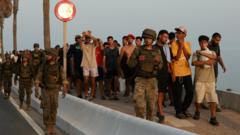
Spain's Migration Crisis Becomes a Political Flashpoint
Spain's migration crisis has emerged as one of the most divisive political issues in recent European history, with the situation at Ceuta serving as a catalyst for unprecedented debate across the continent. The surge in migrant crossings has not only challenged government resources but has also exposed deep ideological rifts among political parties and society at large, fundamentally reshaping Spain's domestic political landscape.
The Ceuta Crossings: A Turning Point
The unprecedented influx of migrants attempting to reach Ceuta, Spain's autonomous city in North Africa, marked a critical moment that would reverberate throughout European politics. Within a matter of days, thousands of people crossed the border, overwhelming local authorities and drawing international scrutiny to Spain's border management policies. This sudden surge exposed vulnerabilities in existing immigration systems and forced policymakers to confront questions they had long avoided.
Social Media's Role in Amplifying Political Tensions
Digital platforms have played an instrumental role in transforming the migration crisis into a full-fledged political storm. Social media networks have become breeding grounds for polarized discussions, with competing narratives about immigration flowing through feeds and trending topics at unprecedented speed. Both supporters and critics of immigration have leveraged these platforms to mobilize public opinion, creating echo chambers that reinforce existing beliefs and intensify political divisions.
How Misinformation Spreads Rapidly
The speed at which false information travels on social media has complicated the situation further. Misleading videos, doctored images, and unverified claims about migrant flows have circulated widely, often distorting public understanding of the actual scale and nature of the crisis. This information ecosystem has made it increasingly difficult for citizens to distinguish between factual reporting and sensationalized content, thereby fueling emotional responses rather than informed debate.
European Divisions Over Immigration Policy
Spain's migration crisis has illuminated fundamental disagreements within Europe regarding immigration policy and border control. Countries have adopted starkly different approaches, ranging from more welcoming stances to hardline enforcement measures. These divergent strategies reflect broader philosophical differences about Europe's identity, economic needs, and humanitarian responsibilities, creating tension between EU member states and testing the bloc's commitment to coordinated action.
National Interests vs. European Solidarity
The crisis has revealed the tension between individual nations' sovereignty and the need for collective European solutions. Spain has called for greater solidarity from fellow EU members, arguing that border states shoulder disproportionate responsibility for managing migration flows. Conversely, some nations have prioritized their own border security concerns, reluctant to accept quotas or participate in burden-sharing initiatives that might increase their own migrant populations.
Political Parties Capitalize on Migration Anxieties
Across Spain and Europe, political parties have seized upon migration anxieties to strengthen their electoral positions. Right-wing parties have particularly benefited from the crisis, attracting voters concerned about cultural integration and labor market competition. Meanwhile, left-leaning parties have struggled to maintain focus on humanitarian concerns while addressing legitimate public worries, creating openings for more extreme political movements.
The Humanitarian Perspective
Amid the political storm, humanitarian organizations have raised critical questions about the treatment of vulnerable migrants, including children and families fleeing dangerous circumstances. The focus on border security and political advantage has often overshadowed discussions about the underlying causes of migration and the protection standards that ought to apply regardless of political considerations. These organizations emphasize that any policy response must balance security concerns with fundamental human rights obligations.
Looking Forward: Spain's Path Ahead
Spain faces the considerable challenge of developing immigration policies that address public concerns while maintaining European commitments and humanitarian standards. The path forward requires nuanced political leadership capable of moving beyond polarized rhetoric to craft solutions that acknowledge the legitimate interests of all stakeholders. Whether political institutions can rise to this challenge while resisting pressure from social media-driven narratives remains to be seen, but the stakes for Spain's political stability and European cohesion could not be higher.