
Saudi Arabia, Turkey, Pakistan Form Historic Defence Alliance
Saudi Arabia, Turkey and Pakistan have signed a groundbreaking defence pact establishing mutual protection. Learn how this strategic alliance impacts Middle Eas...
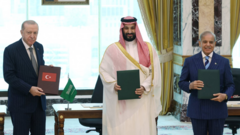
Historic Defence Agreement Between Three Nations
Saudi Arabia, Turkey, and Pakistan have recently formalized a comprehensive defence pact that establishes a framework of mutual protection and collective security. This groundbreaking defence pact represents a significant shift in regional geopolitics, as the three nations commit to treating any military aggression against one member as an attack against the entire alliance.
Core Principles of the Mutual Defence Commitment
According to official statements from Pakistan, the newly established defence pact operates on a fundamental principle: any armed attack directed at one signatory nation will be considered an act of aggression against all three parties. This reciprocal security arrangement marks a substantial escalation in bilateral and trilateral defence cooperation among these strategically important regional powers.
The alliance encompasses coordinated military responses, intelligence sharing, and collaborative defense initiatives. Officials from all three nations emphasized that this framework strengthens their collective ability to address emerging security challenges and maintain regional stability during a period marked by significant Middle East tensions and ongoing conflicts.
Strategic Context in the Middle East
The timing of this defence pact coincides with escalating conflicts and security concerns throughout the Middle Eastern region. Pakistan, located at the crossroads of South Asia and the Middle East, has long sought to strengthen its security partnerships with major regional actors. Similarly, Saudi Arabia and Turkey have identified the need for robust alliance structures to protect their strategic interests and territorial integrity.
The defence pact reflects broader geopolitical realignments occurring across Asia and the Middle East. Turkey's position as a NATO member and bridge between Europe and Asia, combined with Saudi Arabia's influence as a leading Gulf power and Pakistan's strategic significance in South Asian security dynamics, creates a formidable trilateral partnership.
Implications for Regional Security Architecture
This defence pact establishes a precedent for coordinated military planning and collective deterrence among non-traditional alliance partners. The agreement signals to other regional actors that Saudi Arabia, Turkey, and Pakistan are committed to maintaining the balance of power and preventing unilateral aggression.
Military experts suggest that the alliance will facilitate enhanced coordination in border security, counterterrorism operations, and maritime defense. Joint training exercises, technology sharing, and intelligence cooperation are expected to strengthen the operational effectiveness of all three nations' armed forces.
Economic and Diplomatic Dimensions
Beyond military considerations, the defence pact carries significant economic implications. Enhanced security cooperation typically leads to increased trade relationships, infrastructure development projects, and investment opportunities among member states. Pakistan, Saudi Arabia, and Turkey have substantial economic interests that benefit from improved stability and reduced security threats.
The agreement also reflects the three nations' shared concerns about extremism, terrorism, and regional instability. By formalizing their security commitment through this defence pact, they demonstrate unified resolve against common challenges that threaten their populations and national interests.
International Response and Global Implications
The international community has observed this defence pact with considerable interest. Some nations view it as a positive development for regional stability, while others analyze its potential to reshape existing alliance structures. The pact does not target any specific nation but rather establishes a defensive framework based on mutual interests and security concerns.
Observers note that this defence pact reflects the evolving nature of international alliances in the 21st century, where nations form partnerships based on pragmatic security calculations rather than ideological or bloc-based alignments. The trilateral framework demonstrates flexibility and adaptability in addressing contemporary security challenges.
Future Development and Implementation
Implementation of the defence pact will require establishing joint command structures, coordination mechanisms, and regular consultation forums. The three nations have committed to developing detailed protocols that operationalize the mutual defense commitment and ensure rapid response capabilities in case of security threats.
Pakistan, Saudi Arabia, and Turkey are expected to hold regular trilateral military meetings and coordinate their defense policies. This defence pact represents a long-term commitment to collaborative security that will shape regional dynamics for years to come, establishing a precedent for regional cooperation in an increasingly complex geopolitical environment.