
Rail Network Suffers Major Power Failure Affecting Thousands
A significant power outage in Manchester disrupts rail services with widespread delays and cancellations expected to persist throughout the evening hours.
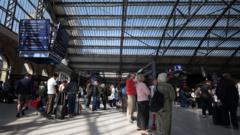
Major Power Failure Disrupts Rail Network Operations
A substantial power failure rail network incident has brought significant disruption to thousands of commuters and passengers across multiple rail routes. The outage, which originated in the Manchester area, has resulted in widespread service interruptions that are expected to continue affecting travelers throughout the evening and into the night.
The power failure rail network crisis represents one of the most significant transport disruptions in recent weeks, with operators working urgently to restore normal service levels. Network controllers and infrastructure teams have been mobilized to address the electrical system failure that triggered the cascading delays across the region's rail network.
Extent of Service Disruptions and Passenger Impact
The Manchester-based outage has generated substantial operational challenges for rail operators managing multiple services simultaneously. Numerous trains have experienced significant delays, while several scheduled departures have been cancelled entirely as operators prioritize safety over attempting to maintain reduced service levels. Passengers waiting at stations have faced extended holding times and limited information about when services might resume to normal capacity.
Transport authorities have confirmed that the power failure rail network situation extends beyond initial assessments, with secondary lines and connecting services also experiencing complications. The interconnected nature of modern rail infrastructure means that disruptions at one critical junction point can rapidly spread across broader geographical areas, affecting thousands of individuals attempting to reach their destinations.
Timeline and Duration of Electrical Outage
Initial reports of the power failure began emerging in early evening hours, with the situation developing rapidly as multiple service lines detected anomalies in their electrical supply systems. Rail operators issued urgent notices to passengers advising them of potential delays and cancellations, recommending alternative travel arrangements where possible. The persistence of the power failure rail network issue suggests that restoration efforts may require several hours of continuous technical work.
Evening commuters have borne the brunt of this disruption, with rush-hour services particularly affected by the systematic cancellations and severe delays. Families, workers, and students attempting to return home have encountered significant obstacles, with some passengers stranded at stations awaiting clarity on service resumption timelines.
Response from Rail Operators and Infrastructure Teams
Network maintenance crews and electrical specialists have been deployed to diagnose and resolve the power failure rail network problem systematically. Their preliminary investigations point to a significant fault within the primary distribution system serving the Manchester zone, though complete details remain under investigation. Operators have urged passengers to avoid travel where possible and to seek alternative transportation methods until full restoration occurs.
Communication teams have established hotlines and updated digital platforms to provide passengers with real-time information regarding service status. However, the rapidly evolving nature of the power failure has made providing precise restoration estimates challenging, as engineers work through diagnostic procedures to identify the exact fault location and required remediation steps.
Broader Implications for Rail Network Reliability
This power failure rail network incident raises questions about infrastructure resilience and redundancy systems designed to prevent such widespread disruptions. Railway authorities will likely conduct comprehensive reviews of electrical distribution systems to identify vulnerabilities that contributed to this event. Such assessments typically focus on backup power systems, circuit protection mechanisms, and rapid response protocols.
The power failure has prompted discussions among industry stakeholders about investment in modernized electrical infrastructure and enhanced monitoring systems that could detect faults before they cascade into service-wide disruptions. Network operators are considering technological upgrades that would provide earlier warning systems and more automated response capabilities.
Passenger Support and Recovery Measures
Rail operators have announced support measures for affected passengers, including compensation policies and refund procedures for cancelled or significantly delayed journeys. Passengers holding tickets for services affected by the power failure rail network disruption will be eligible for compensation under standard industry regulations.
Looking forward, the railway system is expected to gradually restore normal operations as engineers complete repairs to the electrical infrastructure. Passengers are advised to monitor official railway communications for updates on service restoration and to plan their journeys accordingly until full normality is confirmed.