
Navy Shifts Strategy: Invests in Drone-Equipped Warships Over Destroyer Replacement
The Navy prioritizes drone-equipped warships in its new defence plan, modernizing fleet capabilities. Discover the strategic shift away from traditional destroy...
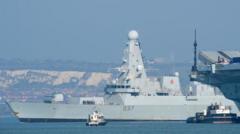
Navy Prioritizes Drone-Equipped Warships in Defence Investment Strategy
The United Kingdom's naval command has announced a significant strategic pivot, choosing to develop and deploy drone-equipped warships rather than pursuing the traditional route of replacing aging destroyer vessels. This decision marks a fundamental shift in how the military approaches fleet modernization, with drone-equipped warships emerging as the centerpiece of the upcoming defence investment plan.
The government's commitment to acquiring drone-equipped warships reflects broader trends in military technology and naval warfare adaptation. Rather than allocating substantial resources to constructing conventional replacement destroyers, the defence establishment recognizes that autonomous and remotely-operated vessels offer greater flexibility, reduced operational costs, and enhanced capabilities for contemporary security challenges.
Strategic Rationale Behind the Fleet Modernization Decision
The transition toward drone-equipped warships addresses multiple operational and budgetary considerations within the defence sector. Traditional destroyer vessels require large crews, extensive maintenance infrastructure, and significant annual operating expenses. Conversely, drone-equipped warships can perform surveillance, reconnaissance, and tactical operations with minimal human presence aboard, substantially reducing personnel costs and training requirements.
This modernization approach aligns with technological advancements that have made autonomous maritime systems increasingly reliable and sophisticated. The defence investment plan recognizes that emerging threats in contested maritime environments demand platforms that offer superior speed, endurance, and operational flexibility compared to conventional warship designs.
Impact on Naval Capabilities and Future Operations
The government's decision to invest in drone-equipped warships will fundamentally reshape the Royal Navy's operational doctrine and tactical capabilities. These vessels can operate in hazardous environments without risking crew safety, making them ideal for anti-piracy operations, mine countermeasures, and intelligence-gathering missions in contested waters.
Drone-equipped warships offer unprecedented advantages in terms of deployment duration. Unlike crewed vessels that must return to port for crew rotation and maintenance, autonomous platforms can maintain continuous presence in strategic maritime zones for extended periods, providing persistent surveillance and rapid response capabilities.
Defence Investment Plan Framework and Implementation Timeline
The upcoming defence investment plan includes comprehensive funding mechanisms to support the development, procurement, and integration of drone-equipped warships into existing naval structures. This financial commitment demonstrates the government's confidence in autonomous vessel technology as the future of maritime defence.
Implementation of this strategy will occur across multiple phases, beginning with initial prototype development and testing, followed by large-scale procurement and fleet integration. The defence establishment has established clear performance metrics and evaluation criteria to ensure that drone-equipped warships meet stringent operational requirements before full deployment.
Technological Specifications and Operational Features
Advanced drone-equipped warships will incorporate cutting-edge sensor systems, autonomous navigation capabilities, and remote command infrastructure. These vessels will feature integrated communication networks that enable seamless coordination with manned platforms and command centers, creating a hybrid force structure that combines human decision-making with machine efficiency.
The technological foundation of drone-equipped warships relies on artificial intelligence, machine learning, and sophisticated maritime domain awareness systems. These components work in concert to enable vessels to identify, track, and respond to maritime threats with minimal human intervention, while maintaining strict adherence to international maritime law and rules of engagement.
Economic and Budgetary Implications
Selecting drone-equipped warships over traditional destroyer replacement programs generates significant budgetary efficiencies within defence spending. The reduced personnel requirements and lower operational costs associated with autonomous vessels allow the government to maximize maritime capabilities within constrained defence budgets.
This investment strategy demonstrates fiscal responsibility while simultaneously ensuring that the Royal Navy maintains technological superiority in contested maritime zones. The long-term operational cost savings from drone-equipped warships exceed the initial capital investment required for development and procurement.
Global Maritime Security Context
The decision to prioritize drone-equipped warships reflects evolving global security challenges and the increasing militarization of maritime domains. Nations worldwide are investing heavily in autonomous vessel technology, recognizing that future naval conflicts will likely involve unmanned platforms operating in coordination with traditional forces.
By committing substantial resources to drone-equipped warships, the government positions the Royal Navy at the forefront of maritime technological innovation. This strategic choice ensures continued dominance in global shipping lanes and contested waters, protecting national interests and supporting international maritime security operations.
Conclusion: Embracing Naval Modernization Through Autonomous Technology
The government's decision to develop drone-equipped warships marks a watershed moment in naval defence strategy. By abandoning the traditional destroyer replacement approach in favor of autonomous platforms, the military demonstrates its commitment to embracing emerging technologies and maintaining technological superiority in increasingly complex maritime environments. This defence investment plan positions the Royal Navy for success in twenty-first-century security challenges while optimizing defence spending efficiency.