
Moon Impact: Korean Lunar Orbiter Records SpaceX Rocket Debris Collision
South Korea's lunar orbiter captures unprecedented images of SpaceX rocket debris impact on the Moon's surface, documenting the collision aftermath.
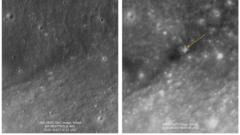
SpaceX Rocket Debris Moon Collision Documented by Korean Spacecraft
South Korea's advanced lunar orbiter has successfully captured significant imagery documenting the moment when SpaceX rocket debris struck the Moon's surface on Wednesday. The Korea Aerospace Research Institute (KARI) released the photographic evidence, which provides researchers with crucial before-and-after visuals of the SpaceX rocket debris Moon impact zone.
Timeline of the Impact Event
The incident occurred when discarded rocket hardware from a SpaceX launch vehicle collided with the lunar terrain. The orbital sequence captured by Seoul's sophisticated surveillance system reveals the exact location where the fragment made contact with the lunar surface. This SpaceX rocket debris Moon event marks one of the few instances where such collisions have been photographically documented in real-time through multiple image captures.
Advanced Imaging Capabilities of Korea's Lunar Mission
The Korea Aerospace Research Institute operates a state-of-the-art lunar orbiter equipped with high-resolution cameras capable of detecting features on the lunar surface with remarkable precision. The spacecraft's imaging systems successfully recorded comparative imagery, establishing a clear visual record of the impact zone both before and after the SpaceX rocket debris struck the Moon. These technical capabilities demonstrate South Korea's growing expertise in space exploration and lunar observation.
Scientific Significance of the Documentation
The photographic evidence obtained from the lunar orbiter provides scientists and engineers with valuable data regarding impact dynamics and crater formation on the Moon's surface. The SpaceX rocket debris Moon collision offers researchers an unexpected opportunity to study real-world impact phenomena without conducting controlled experiments. International space agencies have shown considerable interest in analyzing the documented damage patterns and understanding the geological changes resulting from the incident.
International Context and Space Debris Concerns
The incident highlights ongoing discussions within the global space community regarding orbital debris and waste management. As space operations intensify, the accumulation of discarded rocket stages and defunct satellite components poses increasing challenges for mission planning. The documented SpaceX rocket debris Moon event contributes to growing concerns about space sustainability and the need for improved tracking systems for objects in lunar orbit and beyond.
Korea's Role in Lunar Exploration
South Korea has positioned itself as a significant player in lunar science through continuous investment in space technology and research. The nation's successful lunar orbiter mission demonstrates technological advancement and contributes meaningfully to international scientific understanding of the Moon's environment. The agency's ability to capture detailed imagery of the SpaceX rocket debris Moon impact represents a tangible achievement in the country's space exploration objectives.
Technical Examination of Impact Data
The comparative images released by Korea's space authorities enable researchers to analyze the crater dimensions, debris scatter patterns, and surface alterations caused by the collision. The SpaceX rocket debris Moon impact occurred at considerable velocity, generating sufficient energy to create observable changes in the lunar regolith. Scientists are utilizing this documentation to refine their understanding of projectile impact mechanics and material behavior under extreme conditions.
Future Implications for Space Operations
The successful documentation of this incident through the Korean lunar orbiter establishes important precedents for monitoring future space debris interactions with celestial bodies. Enhanced tracking and imaging capabilities will likely become standard requirements for upcoming lunar missions. The incident involving SpaceX rocket debris Moon contact demonstrates the necessity for continued investment in observation systems that can document and analyze unplanned events in cislunar space.