
Model Reveals Lucian Freud Studio Memories After Record £25m Painting Sale
Sue Tilley recalls champagne lunches and modeling for Lucian Freud in his cluttered studio. Discover the artist's untold stories behind a £25m artwork sale.
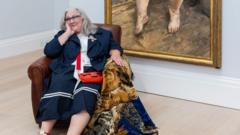
A Model's Unforgettable Experience in Lucian Freud's Iconic Studio
Sue Tilley, the celebrated model who inspired one of the art world's most significant contemporary works, has opened up about her extraordinary experiences modeling for Lucian Freud. Following the record-breaking £25m art sale of a piece bearing her likeness, Tilley has revealed intimate details about her time spent in Lucian Freud's legendary studio, shedding light on the creative process behind one of modern art's most valuable paintings.
The accomplished model recalls a world far removed from the polished galleries and auction houses where Freud's works now command astronomical prices. Instead, she describes an artist working in deliberately unglamorous surroundings, surrounded by the tools of his craft and unexpected decorative choices that reflected his unconventional approach to both art and life.
The Enchantment of Champagne and Creative Discussions
Tilley fondly remembers the social atmosphere that permeated Lucian Freud's working environment during their sessions together. Rather than a sterile creative space, the studio functioned as a meeting ground for intellectual exchange and refined leisure. The presence of champagne lunches became emblematic of their collaborative relationship, transforming what might have been a purely transactional modeling arrangement into something more substantial and mutually enriching.
These elegant repasts provided moments of respite from the intensive work of posing for extended periods. Between sittings, conversations flowed naturally, allowing both artist and subject to connect on a deeper level. For Tilley, these interludes represented windows into Freud's personality beyond his formidable reputation as one of Britain's most important painters.
The Unconventional Workspace and Artistic Eccentricities
What strikes many observers about Tilley's recollections is her characterization of Lucian Freud's studio as notably "scruffy." This description contrasts sharply with the refined nature of the resulting artworks, revealing a fundamental truth about the artist's creative process. The studio was not maintained for appearances but rather functioned as an authentic laboratory where art emerged through disciplined observation and meticulous technique.
Among the studio's most peculiar features was a Rodin sculpture that served the distinctly practical purpose of a doorstop. This detail epitomizes Freud's irreverent relationship with art history and artistic convention. Rather than revering the work of his celebrated predecessor as a museum piece, Freud integrated it into his working space in a matter-of-fact manner, demonstrating his confidence in his own artistic vision and his refusal to be intimidated by the monuments of prior artistic achievement.
The presence of a Rodin in such a utilitarian role speaks volumes about the atmosphere within Lucian Freud's studio. It was a space where function superseded pretense, where the focus remained unwaveringly on the act of creation itself. This environment, far from being a limitation, appears to have fostered the intense concentration necessary for Freud's portrait work, which demanded extraordinary dedication and an almost obsessive attention to detail.
The Historical Significance of the £25m Art Sale
The recent auction result representing a £25m sale price for the Lucian Freud painting featuring Tilley underscores the profound impact their collaboration produced. This valuation places the work among the most expensive paintings ever sold at auction, reflecting not merely the artist's reputation but also the specific power and resonance of this particular portrait. The substantial financial outcome validates the countless hours spent in that cluttered studio, transforming intimate moments of artistic creation into an enduring cultural and economic artifact.
Tilley's willingness to discuss her experiences contributes significantly to public understanding of how such masterpieces emerge. Behind every record-breaking sale lies a human story of dedication, patience, and creative synergy between artist and subject. In this case, those stories involve champagne, conversation, and an unconventional workspace that somehow produced an artwork worthy of museum acquisition and private collector investment.
Legacy of the Artistic Partnership
The passage of time has only enhanced the significance of Tilley's contribution to art history. Her presence as the subject of a Lucian Freud masterpiece has become inseparable from discussions of contemporary British portraiture. The £25m art sale merely monetizes what was already apparent to serious art historians and museum professionals: that this collaboration between artist and model created something genuinely important and culturally meaningful.
Sue Tilley's recent reminiscences serve as a vital testimonial to the collaborative nature of portrait painting, reminding audiences that monumental artworks emerge not through solitary genius alone but through relationships between creative personalities. The story of a model in Lucian Freud's studio—complete with champagne lunches, candid conversations, and a Rodin functioning as a doorstop—enriches our appreciation for the finished work and the extraordinary prices it now commands in the contemporary art market.