
Iran's Supreme Leader Conspicuously Absent at Funeral
Iran's supreme leader remains out of public view following the attack that killed his father at the onset of the US-Israel conflict with Iran.
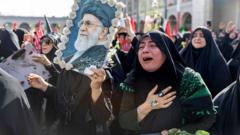
Iran's Supreme Leader Notably Absent from Public Appearances
Following a significant military incident at the beginning of escalating tensions between the United States, Israel, and Iran, the nation's supreme leader has maintained a marked absence from public view. This withdrawal from the spotlight comes during a period of considerable geopolitical uncertainty and internal political reorganization within the Islamic Republic.
Context of the Incident and Its Implications
The absence of Iran's supreme leader has become increasingly notable as senior governmental and religious officials gathered for ceremonial observances. The timing of this withdrawal coincides with the outbreak of military confrontations involving American and Israeli forces, marking a critical juncture in regional relations. Mojtaba Khamenei, a prominent figure within Iran's political hierarchy, has refrained from making any public appearances since the military operations commenced.
Official Attendance and State Response
Despite the supreme leader's conspicuous non-appearance, high-ranking Iranian officials proceeded with official duties and ceremonial functions. Government ministers, religious authorities, and state representatives maintained their scheduled engagements, demonstrating continuity in institutional operations. This separation between the supreme leader's private status and the ongoing functions of the state apparatus represents a significant development in Iran's governance structure during this period of heightened international tensions.
The Broader Geopolitical Context
The confrontation between Iran and the Western-aligned coalition emerged as the dominant concern for Iranian decision-makers and international observers alike. The military operations initiated by coalition forces have reshaped strategic calculations throughout the Middle East. Iran's supreme leader absence from public forums has fueled speculation regarding both his physical condition and his strategic positioning within the broader conflict.
Succession Concerns and State Stability
Questions regarding leadership continuity have naturally arisen given the supreme leader's withdrawal from public engagement. Iran's political system relies heavily on centralized leadership under the office of supreme leader, and any prolonged absence raises concerns about decision-making processes and state stability. The participation of government officials in ceremonial functions suggests that institutional structures continue operating, though observers note the unusual nature of the supreme leader's non-participation in such significant state affairs.
International Observations and Analysis
Foreign governments and international analysts have been closely monitoring developments within Iran's leadership structure. The supreme leader's absence from public view during a militarily active period has attracted considerable international attention. Many experts question how this absence affects Iran's ability to coordinate responses to external military threats and maintain internal political cohesion during wartime conditions.
The situation underscores the critical importance of Iran's supreme leader's role in both symbolic and substantive governance. Any disruption to normal operations raises questions about the resilience of Iran's institutional arrangements. As the US-Israel conflict with Iran continues, the supreme leader's continued absence from public activities remains a focal point for both domestic observers and international intelligence agencies.