
Free Speech Protection Could Impact Labour's Election Results
Liberty's polling reveals 60% of voters consider free speech positions crucial in general elections. Labour faces potential vote loss over speech protection pol...
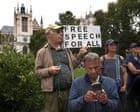
Free Speech Protection Emerges as Critical Electoral Issue
Free speech protection has become a significant factor influencing voter behavior ahead of the next general election, according to new polling data commissioned by prominent human rights organisation Liberty. The research, conducted by More in Common, reveals that many British voters harbour concerns about the government's current approach to safeguarding fundamental freedoms of expression. These findings suggest that free speech protection will play a meaningful role in determining how citizens cast their ballots in the coming parliamentary contest.
The polling demonstrates that free speech protection is not merely an abstract concept for voters, but a tangible issue affecting their electoral decisions. Citizens across the country view the matter as integral to the nation's democratic health and are actively considering political parties' positions on this fundamental right when making voting choices.
Voter Sentiment on Free Speech Policies
The research findings paint a clear picture of public concern regarding free speech protection. According to the polling data, three out of every five respondents stated that a political party's stance on free speech would significantly influence their voting behaviour at a general election. This substantial majority indicates that free speech protection has transcended niche advocacy circles to become a mainstream electoral concern affecting millions of potential voters.
The implications of these results extend across the political landscape. Liberty, the human rights organisation that initiated the polling, argues that the data demonstrates Labour's approach to free speech protection could prove electorally costly. The organisation contends that the party's perceived failure to adequately safeguard free speech rights may result in lost votes from constituencies where this issue resonates strongly with the electorate.
Public Perception of Government Approach
Beyond the headline statistic, the polling reveals deeper concerns about the government's broader position on free speech protection. Numerous respondents believe that recent government policies have had a negative impact on free speech rights in Britain. This perception suggests a disconnect between official policy positions and public expectations regarding how thoroughly free speech protection should be upheld by elected officials.
The concern about free speech protection appears to cut across traditional demographic and political dividing lines. Voters from various backgrounds and political traditions share worries about whether their fundamental right to express opinions freely is being adequately protected by current governmental structures and legislative frameworks.
Electoral Implications for Labour
Liberty's analysis suggests that Labour's current positioning on free speech protection presents a political vulnerability. The organisation warns that voters genuinely care about this issue and have noted what they perceive as negative effects stemming from recent policies. This creates a scenario where Labour could lose electoral support from voters prioritising free speech protection in their voting calculus.
The timing of these findings is particularly significant as political parties prepare their campaigns for the next general election. Politicians across the spectrum will need to address voter concerns about free speech protection more directly and comprehensively than they may have anticipated. The issue is no longer peripheral but central to electoral strategy for major parties.
Understanding the Data
The polling conducted by More in Common provides Liberty with empirical evidence supporting its advocacy work around free speech protection. Rather than relying solely on philosophical arguments about democratic values, the human rights organisation can now point to concrete data demonstrating that ordinary voters consider free speech protection fundamental to their electoral preferences.
This research underscores a broader trend in contemporary politics where voters increasingly prioritise civil liberties and fundamental rights in their electoral choices. Free speech protection has joined healthcare, economic policy, and social issues as a primary concern influencing how people decide which candidates and parties deserve their support.
Moving Forward
As the general election approaches, all political parties will need to address the free speech protection concerns raised by this polling. Liberty's findings serve as both a warning to Labour and an opportunity for all parties to recalibrate their messaging around fundamental rights and freedoms. The organisation's research demonstrates that voters take free speech protection seriously and will judge political parties accordingly on their performance and commitments in this vital area.