
Firefighting Operations Continue Through the Night Amid Vehicle Evacuations
Forest firefighting efforts persist overnight as residents abandon vehicles. Fire spreads rapidly, forcing emergency evacuations and continuous containment oper...
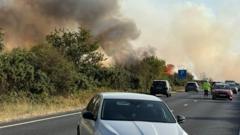
Continuous Forest Firefighting Operations Extend Into the Night
Forest firefighting operations are continuing through the overnight hours as emergency teams work tirelessly to contain the rapidly spreading blaze. The forest firefighting effort has intensified significantly since the initial outbreak on Sunday, with crews maintaining their stations and deploying resources throughout the night to prevent further advancement of the flames.
Residents in the affected areas have been forced to make critical decisions about their belongings, with many choosing to abandon their vehicles as the fire takes hold. The evacuation process has been swift and mandatory, with authorities prioritizing the safety of residents over property preservation during this critical phase of the forest firefighting response.
Dramatic Account of Family Emergency
One resident shared a harrowing account of her family's experience during the evacuation. The woman described a moment of intense fear when she believed her family's car might ignite from the approaching flames on Sunday afternoon. As the fire intensified around her neighborhood, she and her family made the difficult decision to leave their vehicle behind and evacuate on foot to safety.
Her testimony reflects the broader panic and urgency that gripped the community as the forest firefighting teams struggled to manage the fire's rapid expansion. The speed at which the flames spread left little time for careful evacuation procedures, forcing residents to prioritize their personal safety above all other concerns.
Abandoned Vehicles and Evacuation Challenges
Multiple vehicles have been left behind in evacuation zones as the forest firefighting operation continues. These abandoned cars present both a challenge and a symbol of the crisis facing the community. Some vehicles remain in areas where the fire has not yet reached, while others are positioned in danger zones where crews cannot safely retrieve them during active forest firefighting operations.
Emergency management officials have indicated that while property retrieval is important, the forest firefighting priority remains focused on protecting human lives and preventing the fire from spreading to additional residential areas. The decision to allow vehicles to remain unattended is part of a larger strategy to maintain clear evacuation routes and ensure that all resources are devoted to active fire suppression and overnight containment efforts.
Extended Forest Firefighting Through Darkness
The decision to continue forest firefighting operations throughout the night represents a significant escalation in the emergency response. Fire management teams have established night-work protocols to maintain visibility and operational effectiveness using specialized lighting equipment and thermal imaging technology. These advanced tools enable crews to track the fire's movement and identify hotspots that require immediate attention even in darkness.
Overnight forest firefighting presents unique challenges, including reduced visibility, lower temperatures that can affect fire behavior, and fatigue among personnel who have been working continuously since Sunday. Despite these obstacles, authorities have determined that maintaining constant pressure on the fire is essential to prevent it from establishing new perimeters and potentially threatening additional communities.
Community Impact and Response Coordination
The broader community has been mobilized to support the forest firefighting effort. Local authorities have established evacuation centers where residents can find shelter, receive updates on the situation, and access emergency services. These facilities remain active through the night to accommodate those who have fled their homes and abandoned their vehicles in the affected zones.
The forest firefighting operation involves coordination between multiple agencies, including local fire departments, state forestry services, and emergency management officials. This multi-agency approach ensures that resources are deployed efficiently and that forest firefighting strategies are adapted in real-time based on changing conditions and fire behavior patterns.
Looking Ahead: Continued Overnight Efforts
As dawn approaches, the forest firefighting operation is expected to intensify further with improved visibility and the arrival of additional resources and personnel. The overnight containment efforts are designed to prevent the fire from advancing into new territories while teams prepare for a comprehensive push to suppress and control the blaze during daylight hours.
Residents are urged to remain vigilant and prepared for potential evacuation orders. Those in threatened areas should avoid returning to their homes or attempting to retrieve vehicles until authorities have declared it safe to do so. The forest firefighting operation remains fluid and dynamic, with conditions changing rapidly as teams work through the night to protect the community and its residents.