
Colombia's Presidential Election Defined by Internal Armed Conflict
Colombia's escalating internal conflict shapes presidential race between left-wing senator supporting gang negotiations and Trump-backed outsider candidate.
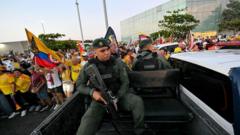
Colombia's Internal Conflict Becomes Central to Presidential Race
Colombia internal conflict has emerged as the defining issue in the nation's high-stakes presidential election, creating a sharp ideological divide between two contrasting political visions. The escalating violence linked to armed gangs and drug trafficking organizations continues to dominate the campaign narrative, forcing voters to choose between fundamentally different approaches to addressing the country's most pressing security challenges.
The Left-Wing Candidate: Dialogue Over Confrontation
A prominent left-wing senator representing the progressive wing of Colombian politics has positioned himself as an advocate for negotiated settlements with armed groups operating across the nation. This candidate believes that dialogue and political engagement offer more sustainable solutions to gang violence than military-focused strategies. His approach emphasizes understanding the socioeconomic roots of conflict and establishing pathways for disarmament through international mediation.
The senator's platform prioritizes development in conflict-affected regions, aiming to address poverty and unemployment that fuel recruitment into criminal organizations. His supporters argue that this comprehensive approach could reduce violence more effectively than enforcement-only tactics. The candidate has faced criticism from security hawks who view negotiations with armed groups as a capitulation that rewards criminal activity.
The Outsider Candidate: Security-First Approach
On the opposing side stands an outsider candidate who has secured backing from international figures, including former U.S. President Donald Trump. This candidate campaigns on a strong law-and-order platform, promising aggressive action against drug cartels and gang structures. The outsider argues that Colombia needs decisive military and police operations to restore territorial control and eliminate criminal networks threatening civilian populations.
This candidate's campaign emphasizes rapid response to gang violence and enhanced international cooperation with U.S. enforcement agencies. Supporters contend that security must be established before addressing root causes, while critics worry about potential human rights concerns with a hardline approach.
The Colombia Internal Conflict Reality
Colombia's internal conflict has claimed tens of thousands of lives and displaced millions over decades. Recent years have witnessed a resurgence in violence, particularly in regions where defunct FARC dissident factions and ELN guerrillas operate alongside criminal enterprises. These armed groups control drug trafficking routes worth billions annually, making security operations exceptionally complex and dangerous.
The conflict extends beyond traditional guerrilla warfare to include gang turf wars, extortion networks, and forced recruitment. Civilian populations in rural and urban areas face constant threats, limiting economic development and social progress. The election presents an opportunity to determine national priorities for addressing these multifaceted security challenges.
Electoral Stakes and International Dimensions
The presidential election carries significant implications for Colombia's international relations and security partnerships. Trump's endorsement of the outsider candidate signals potential shifts in U.S.-Colombia cooperation strategies, particularly regarding drug enforcement and military aid. The left-wing senator's candidacy reflects broader regional trends toward diplomatic solutions and social investment as conflict resolution tools.
Voters face a consequential choice between negotiation and confrontation as primary strategies. The election outcome will determine whether Colombia pursues diplomatic channels with armed groups or escalates military operations. This decision affects not only Colombian citizens but also regional stability and international drug trafficking patterns.
Campaign Dynamics and Voter Concerns
Throughout the campaign, security remains paramount in voter surveys, with citizens expressing frustration over gang violence affecting daily life. Both candidates claim superior abilities to address these concerns, though their methods diverge dramatically. The left-wing senator emphasizes long-term structural reforms, while the outsider candidate promises immediate security improvements through enforcement mechanisms.
Rural communities suffering from armed group presence often support stronger military responses, whereas urban areas and progressive constituencies favor negotiated approaches. This geographic and ideological polarization reflects deeper disagreements about Colombian identity and national direction in addressing the internal conflict that has marked recent decades.