
Burnham Attributes UK Economic Stagnation to Brexit and Thatcher Legacy
PM Burnham blames Brexit and Thatcher for Britain's economic struggles, calling for honest reflection on 40 years of political missteps in first Commons speech.
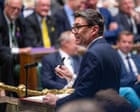
Prime Minister Burnham's Historic First Commons Address
In a significant moment for his administration, Prime Minister Andy Burnham delivered his inaugural speech to Parliament following his appointment approximately six weeks earlier. His address centred on the critical assessment that Burnham Brexit Thatcher policies have fundamentally shaped Britain's economic trajectory, with Burnham explicitly stating that the nation must confront uncomfortable truths about its recent political history.
The prime minister emphasised that Britain has undertaken "a series of wrong turns" over the past four decades, requiring a candid examination of decisions that have contributed to prolonged economic underperformance. Burnham articulated a vision for national renewal, stating his determination to foster renewed optimism that would enable the country to "make this next decade better than the last."
Economic Accountability and Historical Assessment
Burnham's critique extends beyond contemporary challenges, placing substantial responsibility on the Thatcher era and the Brexit vote for the UK's current economic predicament. The prime minister argued that a comprehensive reassessment of policy directions is essential for restoring growth and confidence in Britain's future trajectory. This represents a deliberate pivot toward acknowledging systemic issues that previous administrations have either overlooked or underestimated.
By explicitly linking Burnham Brexit Thatcher decisions to the present state of stagnation, the government signals its intention to differentiate itself through transparent accountability. The message conveyed to MPs and the public suggests that recognition of past errors is a prerequisite for implementing effective solutions moving forward.
Defence Spending Commitments and Strategic Priorities
The prime minister indicated his administration's serious intentions regarding military investment, hinting at a commitment to allocate 3% of GDP toward defence expenditure by 2030. This decision reflects broader security considerations and geopolitical realities affecting British strategic planning. Burnham's appointment of John Healey as chancellor was explicitly framed as deliberate, with the prime minister noting that Healey's established position on military spending made him the appropriate choice for this critical economic portfolio.
This appointment signals coherence between defence policy objectives and fiscal management, suggesting that the government views military preparedness as integral to economic strategy and national security.
Infrastructure and Privatisation Questions
Another significant area of focus involved the water industry, with Burnham signalling openness to renationalisation as a potential solution to persistent sector failures. The prime minister characterised the industry as a "leaking monument" to the broader failures of privatisation policies implemented decades earlier. By indicating that his government is examining "all possible solutions," Burnham demonstrated willingness to reconsider conventional approaches to infrastructure management.
This stance reflects growing political recognition that certain industries may function more effectively under public ownership, particularly when private sector stewardship has demonstrably failed to serve public interests adequately.
Electoral Reform and Democratic Renewal
Burnham also broached the contentious subject of electoral reform, suggesting his government remains open to revisiting this question in Labour's next manifesto. Rather than imposing unilateral change, the prime minister emphasised the necessity of building consensus across Parliament before implementing any modifications to the electoral system.
His comments indicated that "there needs to be a mandate to make that change," and that while differing views exist within Parliament, securing broad agreement at the next election would be prerequisite for implementing electoral reform during the subsequent parliamentary term. This measured approach suggests recognition that such fundamental changes require widespread democratic legitimacy.
Climate Policy and Energy Pragmatism
The prime minister confirmed his intention to attend the Cop31 climate summit in Turkey while continuing the government's commitment to green energy development. However, Burnham articulated a pragmatic stance regarding energy supply, indicating flexibility in responding to immediate needs while maintaining long-term environmental commitments.
His comments regarding the balance between fossil fuels and renewable energy suggested the government does not view these objectives as mutually exclusive. "The mistake is saying it's got to be one or the other for political purposes," Burnham stated, emphasising instead that Britain's energy future "is going to have to be both." This practical positioning indicates readiness to approve developments such as the Jackdaw gasfield, demonstrating that climate ambitions need not preclude pragmatic energy security measures.
Conclusion: A Government of Substantial Change
Burnham's first Commons speech as prime minister established the broad contours of his administration's policy direction and philosophical approach. By confronting uncomfortable historical realities—particularly regarding Burnham Brexit Thatcher legacies—the government positioned itself as committed to honest reassessment and substantive reform. The emphasis on building consensus, pursuing pragmatic solutions, and acknowledging past mistakes suggests an administration attempting to distinguish itself through transparency and strategic clarity regarding Britain's economic and political future.