
Artificial Ice Pyramids Preserve Water for India's Mountain Communities
Discover how Himalayan villages use innovative artificial ice pyramids to secure critical water supplies for spring farming and combat climate-induced drought c...
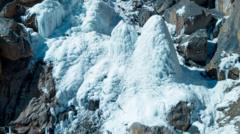
Innovative Solutions Transform Mountain Agriculture in the Himalayas
Artificial ice pyramids represent a groundbreaking approach to addressing water scarcity in remote Himalayan regions. These engineered structures are fundamentally changing how isolated mountain communities manage their most precious resource during critical growing seasons. By creating artificial ice pyramids, villages across India's high-altitude zones have discovered an effective method to combat the unpredictable water challenges that threaten their agricultural survival.
The artificial ice pyramids function as strategic water reserves, storing frozen precipitation and runoff during winter months when temperatures plummet far below freezing. As spring arrives and farming season begins, these carefully constructed formations gradually melt, releasing consistent water supplies directly into irrigation channels that feed agricultural fields. This ingenious system ensures that farmers have reliable access to water precisely when their crops need it most for germination and growth.
Understanding the Technology Behind Ice Pyramid Construction
The creation of artificial ice pyramids involves a sophisticated understanding of local topography, climate patterns, and hydrology. Engineers work with village communities to identify optimal locations, typically in shaded valleys where natural temperatures remain coldest throughout winter. The process begins with careful site selection, analyzing aspects like sunlight exposure, elevation, and proximity to water sources.
Construction of these structures requires channeling mountain streams and springs into designated areas where water can freeze naturally during the winter months. Workers create layered formations using traditional techniques combined with modern engineering principles, building pyramidal shapes that maximize surface area while minimizing exposure to premature melting. The height and slope angles are precisely calculated to optimize ice accumulation and control the melting rate during spring.
Climate Adaptation in High-Altitude Farming
Mountain villages throughout the Himalayas face increasingly unpredictable water availability due to shifting precipitation patterns and changing seasonal temperatures. Traditional glacier-fed systems have become unreliable as these natural ice formations retreat at accelerating rates. Artificial ice pyramids offer these communities a degree of independence from climate volatility, allowing them to maintain agricultural productivity despite environmental uncertainties.
Community Impact and Agricultural Resilience
The implementation of artificial ice pyramid systems has dramatically improved food security across numerous Himalayan communities. Farmers who previously faced devastating water shortages during critical growing periods now enjoy consistent irrigation supplies that enable successful crop cultivation. This increased agricultural reliability has direct economic implications, allowing village households to generate stable income from their farming operations.
Local communities have developed extensive expertise in maintaining these structures year after year. Village engineers monitor ice accumulation throughout winter, assess ice quality and density, and adjust water distribution channels based on real-time melting rates. This hands-on management approach ensures optimal performance while creating employment opportunities within the communities that benefit most directly from the artificial ice pyramids.
Scaling the Solution Across Mountain Regions
The success of artificial ice pyramids in initial implementation zones has sparked interest in expanding the technology throughout vulnerable mountain communities. Agricultural extension services and environmental organizations now work actively with village leaders to establish new systems in regions experiencing severe water stress. Training programs teach local residents the technical skills required to construct and maintain these structures independently.
The transferability of this solution to other high-altitude regions offers encouraging prospects for communities facing similar challenges. Variations in design can be adapted to account for different climate zones, precipitation patterns, and topographical features. As more villages adopt artificial ice pyramid technology, the collective impact on regional water security and agricultural sustainability continues to grow.
Environmental and Climate Considerations
Artificial ice pyramids represent an environmentally sustainable approach to water management that works with natural cycles rather than against them. Unlike energy-intensive desalination or large-scale infrastructure projects, these systems harness gravity, seasonal temperature variations, and locally available water sources. The minimal environmental footprint makes artificial ice pyramids particularly attractive for remote regions where alternative water solutions prove impractical.
Climate scientists recognize these systems as valuable adaptation strategies that enhance community resilience in the face of environmental change. While artificial ice pyramids cannot completely replace retreating natural glaciers on a large scale, they provide crucial localized water security for vulnerable populations. The technology demonstrates how traditional ecological knowledge, combined with modern engineering understanding, can create practical solutions addressing climate-related challenges.
Future Prospects and Continued Innovation
Research organizations continue exploring refinements to artificial ice pyramid design and construction methods. Scientists investigate whether additional insulation techniques could extend the melting season, potentially providing water security throughout more extended periods. Collaborative projects between academic institutions and village communities aim to optimize systems based on accumulated practical experience and scientific monitoring data.
The success of artificial ice pyramids in securing water supplies for mountain villages represents a beacon of hope for communities worldwide facing acute water scarcity challenges. As climate pressures intensify, innovative approaches like these become increasingly essential for protecting agricultural livelihoods and ensuring food security in vulnerable regions. The continuation of this work promises meaningful improvements in the sustainability and resilience of Himalayan mountain communities for generations to come.