
Afghan Women Reveal Unrecognizable Lives Under Five Years of Taliban Control
Afghan women report devastating changes after five years under Taliban rule, including public floggings, job losses, and healthcare barriers threatening their s...
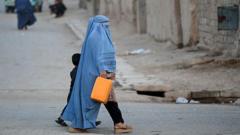
Afghan Women's Lives Transformed Under Taliban Governance
Five years under Taliban rule has left Afghan women describing their existences as fundamentally unrecognizable compared to their previous circumstances. Interviews conducted with women across the nation reveal a pattern of systematic restrictions that have dismantled educational opportunities, employment prospects, and access to essential medical services. The Taliban rule Afghanistan women's lives through increasingly stringent policies that have created unprecedented humanitarian concerns among international observers and humanitarian organizations.
Public Punishments and Legal Consequences
Women throughout Afghanistan report witnessing and experiencing public floggings as punishment for violations of the Taliban's strict moral codes. These public displays of punishment serve as enforcement mechanisms for the regime's interpretation of Islamic law, creating widespread fear and limiting movement in public spaces. The severity of these penalties has escalated over the five-year period, with reports indicating expanded definitions of offenses that can result in corporal punishment. Female citizens describe avoiding public areas where such punishments are administered, fundamentally restricting their freedom of movement and participation in community life.
Employment Bans and Economic Devastation
The systematic exclusion of women from the workforce represents one of the most transformative aspects of Taliban rule Afghanistan women currently endure. Government positions, which were previously accessible to qualified female professionals, are now entirely closed to women. Private sector employment has similarly contracted dramatically, with many businesses forced to comply with restrictions prohibiting female workers in most roles. Women who previously worked as teachers, doctors, engineers, and administrators describe losing their livelihoods overnight, creating severe financial hardship for their families and eliminating economic independence that many had achieved in previous decades.
Healthcare Access and Medical Emergencies
Perhaps most critically, Taliban restrictions women's access to healthcare services, creating dangerous barriers to life-saving medical treatment. Female patients face severe limitations in receiving care from male physicians, while the shortage of female medical professionals has created a healthcare crisis. Pregnant women requiring emergency obstetric care experience delays that have resulted in preventable maternal deaths. Women's healthcare barriers have extended to restrictions on seeking treatment for reproductive health issues, chronic illnesses, and mental health conditions. International medical organizations have documented cases where women have died from treatable conditions because they could not access appropriate medical care under the current restrictions.
Mental Health Crisis Among Female Population
The psychological toll of living under these constraints has created a significant mental health emergency. Afghan women report depression, anxiety, and trauma-related disorders at alarming rates. The inability to access mental health services compounds these issues, as psychiatric support remains difficult to obtain. Women describe feelings of hopelessness regarding their futures and the futures of their daughters, knowing that educational and professional opportunities have been severely curtailed. The cumulative effect of employment restrictions, healthcare barriers, and social constraints has created a population-wide mental health crisis that remains largely unaddressed.
Education Barriers and Lost Opportunities
Secondary and higher education for girls has been severely restricted or eliminated entirely, representing a generational loss of educational opportunity. Young women who anticipated university education now find those pathways closed. This educational deprivation extends beyond individual opportunity costs; it affects Afghanistan's long-term development prospects and workforce capacity. Teachers who previously instructed female students have been removed from their positions, and school facilities have been repurposed or closed. Women currently unable to pursue education describe this as particularly painful given the progress achieved in previous decades when educational access for girls had expanded significantly.
Social Restrictions and Daily Life
Beyond specific policy areas, the Taliban rule Afghanistan women's daily existence through extensive social restrictions that govern behavior, dress, and public conduct. Women must comply with strict dress codes and cannot travel without male accompaniment in many jurisdictions. These rules limit independence in pursuing healthcare, commerce, and social connections. The enforcement of these restrictions varies by region and has become increasingly severe in Taliban-controlled areas. Women describe constantly modifying behavior to avoid confrontation with authorities and living with persistent anxiety about compliance with regulations that continue to expand in scope.
International Response and Humanitarian Concerns
The United Nations and international human rights organizations have extensively documented the deteriorating situation for Afghan women under Taliban governance. Multiple international bodies have issued reports cataloging violations and calling for restoration of women's rights. However, these international efforts have had limited impact on Taliban policies. Countries providing humanitarian assistance face complex dilemmas regarding support while addressing human rights concerns. The humanitarian community continues documenting violations while attempting to deliver essential services to vulnerable populations including women and children affected by these restrictive policies.
Future Outlook and Resistance Movements
Despite overwhelming restrictions, women in Afghanistan continue organizing resistance efforts and advocating for rights restoration. Underground education networks continue operating in some areas, and women's rights activists persist in documenting violations despite personal danger. These resistance movements represent determination to preserve educational access and professional opportunities for future generations. However, the risks involved in such activities remain substantial, and many women express uncertainty about whether circumstances will improve within their lifetimes. The five-year trajectory suggests further restriction rather than liberalization, creating profound uncertainty about women's futures in Taliban rule Afghanistan women currently inhabit.