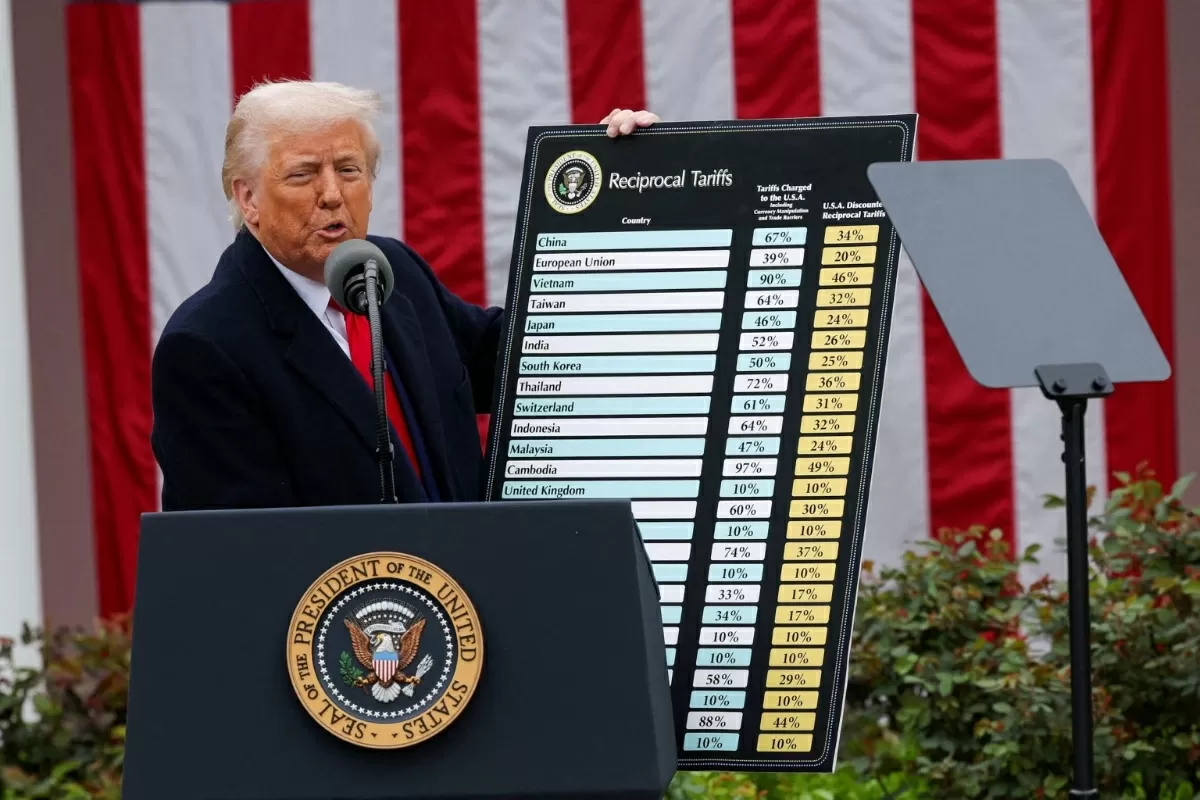
US President Donald Trump has once again made headlines with his latest decision to raise the global tariff rate to 15 per cent from the previous 10 per cent. This move comes just a day after the US Supreme Court struck down his policy, causing a stir in the international trade community.
In a proclamation signed by Trump, a temporary 10 per cent duty will be imposed on imports under section 122 of the 1974 trade act. This decision has been met with mixed reactions, with some applauding the President for taking a strong stance on trade while others expressing concern over the potential impact on the economy.
The 1974 trade act, also known as the Trade Act of 1974, was enacted to provide the President with the authority to adjust tariffs and other trade measures in response to unfair trade practices. This includes the ability to impose tariffs on specific goods or countries that are deemed to be engaging in unfair trade practices.
Trump’s decision to raise the tariff rate is a clear indication of his determination to protect American industries and workers from what he believes are unfair trade practices by other countries. This move is in line with his “America First” policy, which aims to prioritize the interests of the United States in all trade deals.
The President has been vocal about his dissatisfaction with the current state of global trade, particularly with countries such as China and Mexico. He has repeatedly accused them of engaging in unfair trade practices, such as currency manipulation and intellectual property theft, which he believes have led to a significant trade deficit for the US.
In a tweet, Trump stated, “We are winning, big time, against China. Companies and jobs are fleeing. Prices to us have not gone up, and in some cases, have come down. China is not our problem, though Hong Kong is not helping. Our problem is with the Fed. Raised too much & too fast. Now too slow to cut….”
This decision to raise the tariff rate is also seen as a response to the recent escalation of the trade war between the US and China. The two countries have been engaged in a tit-for-tat tariff battle, with both sides imposing tariffs on billions of dollars worth of goods. The latest move by Trump is expected to further strain the already tense trade relations between the two economic giants.
However, not everyone is in favor of this decision. Critics argue that the increased tariff rate will ultimately hurt American consumers and businesses, as they will have to pay higher prices for imported goods. This could also lead to retaliatory measures from other countries, further escalating the trade war and potentially causing harm to the global economy.
Despite the criticism, Trump remains steadfast in his decision, stating that the increased tariff rate is necessary to protect American industries and jobs. He also believes that this move will force other countries to negotiate fairer trade deals with the US, ultimately benefiting the American economy.
The President’s decision has also been met with support from some industry leaders and lawmakers. They believe that this move will level the playing field for American businesses and provide them with a fair chance to compete in the global market.
In addition to the increased tariff rate, Trump has also announced plans to provide financial aid to American farmers who have been impacted by the trade war. This aid package, which is expected to be worth billions of dollars, aims to alleviate the burden on farmers who have been hit hard by retaliatory tariffs from China.
In conclusion, President Trump’s decision to raise the global tariff rate to 15 per cent is a bold move that has sparked both praise and criticism. While some see it as a necessary step to protect American industries and jobs, others fear the potential consequences it may have on the economy. Only time will tell the true impact of this decision, but one thing is for sure – Trump is determined to put America’s interests first in all trade deals.


![Complete BritRail Pass Guide [Types, How to Use It, Pros + Cons]](https://inside-news.uk/wp-content/uploads/2025/06/00221EB4-BCA2-4DBB-6CD4-83DBC37D71FA-120x86.webp)