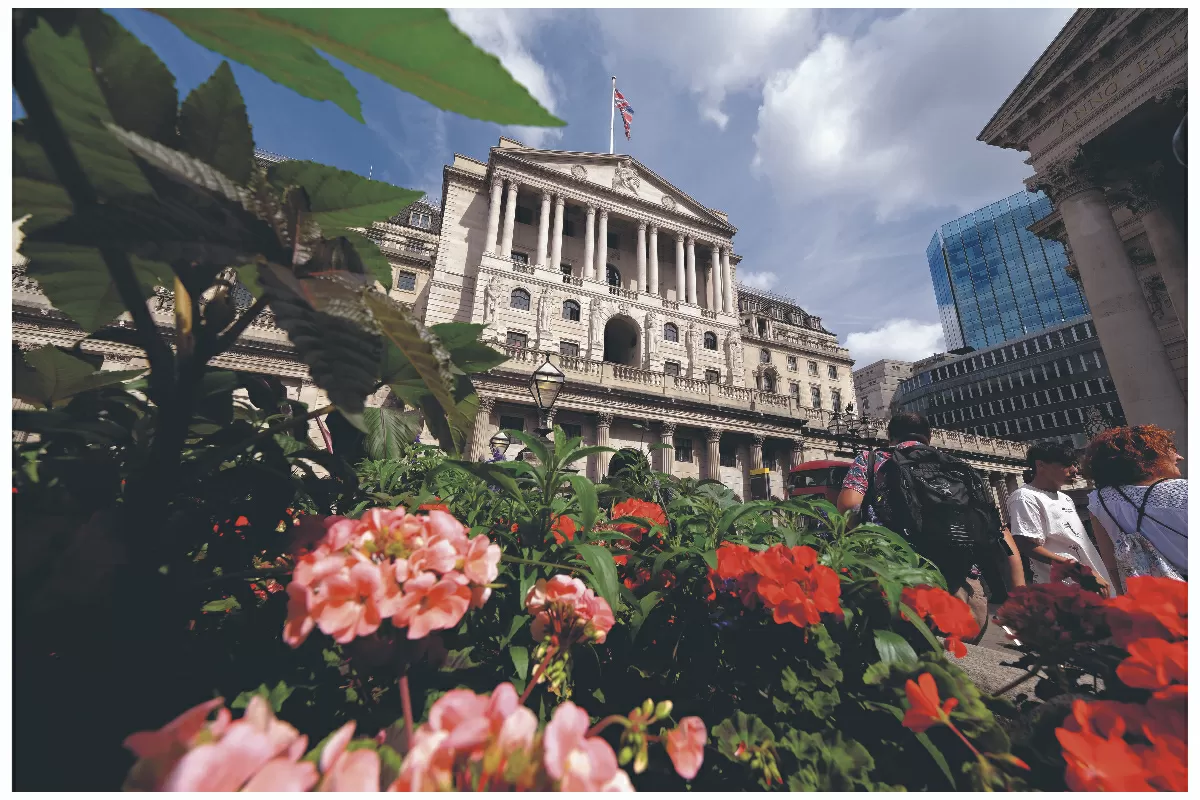
The Bank of England is expected to keep interest rates at 3.75 per cent during its first meeting of the year as policymakers strive to manage rising inflation. Despite growing pressure to lower rates, the Bank is expected to hold steady due to insufficient data to support a rate cut at this time.
The monetary policy committee (MPC) is set to convene next week to discuss the state of the economy and make decisions on interest rates. With inflation hovering above the Bank’s target of 2 per cent, the committee faces a challenging task of balancing economic growth and price stability.
In recent months, inflation has been on the rise, driven by factors such as higher energy prices and a weaker pound. This has prompted some experts to call for a rate increase to curb the effects of rising prices. However, the Bank has maintained its stance of keeping rates unchanged, citing the need for more data to assess the true impact of inflation on the economy.
One of the key factors that the MPC will consider is the impact of Brexit on the economy. With the deadline for the UK’s departure from the EU looming, there is still much uncertainty surrounding the outcome of negotiations and the potential effect on the economy. This leaves the Bank with limited information on how to proceed with interest rates.
Another factor that the MPC will take into account is the slowing global economy. The ongoing trade tensions between the US and China, as well as the possibility of a no-deal Brexit, have caused a slowdown in global growth. This could have a knock-on effect on the UK economy, further complicating the decision on interest rates.
Despite these challenges, the Bank is expected to maintain a positive outlook on the UK economy. Economic growth remains solid, and the labor market has remained resilient. This has led to speculation that the Bank may even consider a rate hike later in the year if inflation continues to rise.
However, for the time being, the MPC is likely to err on the side of caution and keep rates unchanged. This decision will be welcomed by businesses and consumers alike, as it will provide a level of stability in the economy.
Furthermore, a stable interest rate environment will also benefit borrowers, as it will keep borrowing costs at a reasonable level. This will allow businesses to invest and expand, which in turn will stimulate economic growth.
It is also worth noting that the Bank’s primary mandate is to maintain price stability and keep inflation in check. With inflation currently above the target rate, the Bank’s focus will be on implementing measures to bring it back down to the desired level. This may require keeping rates unchanged for the time being, but it is a necessary step to ensure long-term economic stability.
In conclusion, the Bank of England is expected to keep interest rates at 3.75 per cent during its first meeting of the year. While there are various factors at play, the Bank’s decision to maintain rates is a prudent one, considering the current state of the economy. With a steady interest rate environment, businesses and consumers can have confidence in the stability of the economy, and the Bank can continue to work towards its mandate of maintaining price stability.
![Belfast Travel Guide for First-Time Visitors [What to See, Do + Plan]](https://inside-news.uk/wp-content/uploads/2026/02/F1A62C8A-B07E-6DD1-AE58-55756815EC1C-75x75.webp)

![Complete BritRail Pass Guide [Types, How to Use It, Pros + Cons]](https://inside-news.uk/wp-content/uploads/2025/06/00221EB4-BCA2-4DBB-6CD4-83DBC37D71FA-120x86.webp)