
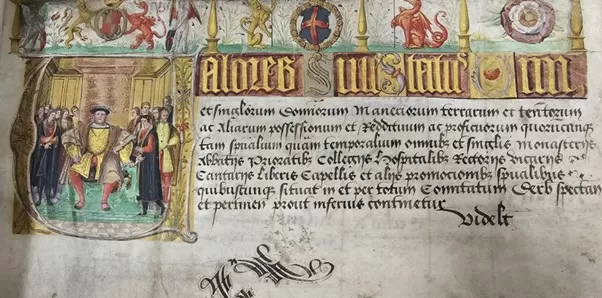
The National Archives is an institution dedicated to preserving and providing access to the historical records of the United Kingdom. It is a treasure trove of information that offers a glimpse into the past and helps us understand our present. One such valuable document that has recently been made accessible by The National Archives is the financial survey of the Church, ordered by King Henry VIII in 1535. This survey is a testament to the turbulent times of the English Reformation and provides a unique perspective on the state of the Church during that period.
In 1535, King Henry VIII issued an order for a thorough inspection and survey of the Church in England and Wales. This survey was conducted by his inspectors who travelled the length and breadth of the country, counting every church, monastery, cathedral, chapel, chantry, college, school, hospital, and poor house. The goal of this survey was to assess the wealth and possessions of the Church, which would ultimately lead to the dissolution of monasteries and the break with Rome.
The survey conducted by Henry VIII’s inspectors was a massive undertaking. It covered over 8,000 parish churches, 650 monasteries, and 22 cathedrals, as well as numerous other religious institutions. The inspectors recorded detailed information about the income, expenses, and assets of each institution, providing a comprehensive picture of the Church’s financial state.
Thanks to The National Archives, this valuable survey is now easily accessible to the public. It offers a fascinating insight into the wealth and power of the Church during the reign of Henry VIII. The document provides a wealth of information, including the names and locations of the religious institutions, the names of the clergy and their incomes, and the value of their assets.
This survey is not just a record of finances; it also sheds light on the religious and social landscape of England and Wales in the 16th century. It highlights the vast influence of the Church, which owned vast amounts of land and controlled a significant portion of the country’s wealth. It also reveals the stark contrast between the rich and powerful monasteries and the poor and struggling parish churches.
But perhaps the most remarkable aspect of this survey is the fact that it was conducted during a time of great religious upheaval. The English Reformation was a pivotal moment in history, and this survey captures it in all its complexity. It reflects the tension between the King and the Church and the significant changes that were taking place in the country.
The National Archives has made this survey accessible not only to researchers and historians but also to the general public. It is a valuable resource for anyone interested in the history of the Church, the English Reformation, or the Tudor era. It offers a glimpse into a crucial period in English history and helps us understand the events that shaped our country.
In addition to providing access to the survey, The National Archives has also digitized and transcribed the document, making it easier to search and navigate. This is a significant step forward in making historical records more accessible and user-friendly. It allows anyone with an interest in history to explore the survey and discover the information it holds.
The National Archives is playing a crucial role in preserving and promoting our cultural heritage. By making the financial survey of the Church accessible, they are not only giving us a window into the past but also encouraging us to learn from it. This document is a reminder of the importance of preserving our history and the valuable insights it can provide for our future.
In conclusion, The National Archives is helping us understand the turbulent times of the English Reformation by making the financial survey of the Church accessible. This document is a treasure trove of information that provides a unique perspective on the state of the Church during the reign of Henry VIII. It is a valuable resource for researchers, historians, and the general public, and it is a testament to the important role that The National Archives plays in preserving our history.


![Complete BritRail Pass Guide [Types, How to Use It, Pros + Cons]](https://inside-news.uk/wp-content/uploads/2025/06/00221EB4-BCA2-4DBB-6CD4-83DBC37D71FA-120x86.webp)