
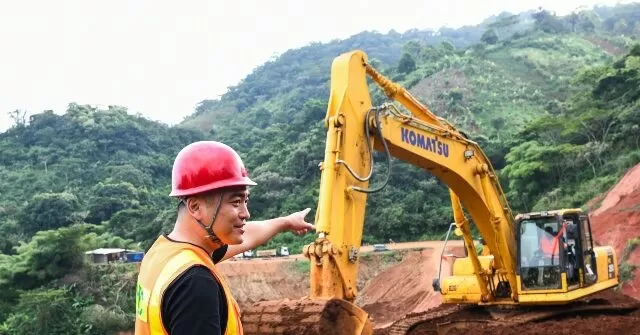
China’s Belt and Road Initiative (BRI) has been one of the most ambitious and far-reaching infrastructure projects in recent history. It has aimed to connect Asia, Europe, and Africa through a network of roads, railways, ports, and other infrastructure projects. However, recent reports suggest that the BRI is facing challenges in Africa, with new loans for infrastructure projects down by over 50 percent. This has raised concerns about the sustainability of the BRI and its impact on African countries.
The BRI was launched in 2013 by Chinese President Xi Jinping with the aim of boosting trade and economic cooperation between China and other countries. It has been hailed as a game-changer for developing countries, especially in Africa, which has been struggling with inadequate infrastructure for decades. The BRI promised to bring much-needed investment and development to the continent, but now it seems that the tide is turning.
According to a recent report by the China-Africa Research Initiative at Johns Hopkins University, new loans for BRI projects in Africa have dropped from $29 billion in 2016 to just $13 billion in 2020. This is a significant decline and raises questions about the future of the BRI in Africa. The report also highlights that the amount of money flowing from African debtors to Chinese banks has surpassed the amount of money coming in from Chinese loans. This means that African countries are now paying more to Chinese banks in debt repayments than they are receiving in new loans for infrastructure projects.
This shift in the flow of money has been attributed to China’s tightening grip on its investments in Africa. In recent years, Chinese banks have become more cautious in their lending, focusing on projects that are more financially viable and less risky. This has resulted in a slowdown in new loans for BRI projects, as Chinese banks are now prioritizing debt repayment over new investments.
The decline in BRI loans has also been linked to the economic slowdown caused by the COVID-19 pandemic. Many African countries have been hit hard by the pandemic, with their economies contracting and their debt levels rising. This has made it difficult for them to take on new loans, especially from China, which has been tightening its lending policies.
However, despite these challenges, it is important to note that the BRI has already made a significant impact in Africa. In the past few years, it has helped to build much-needed infrastructure, such as roads, railways, and ports, in many African countries. These projects have not only improved connectivity but have also created jobs and boosted economic growth in these countries. The BRI has also provided African countries with an alternative source of financing, reducing their dependence on traditional Western lenders.
Moreover, China has taken steps to address the concerns about the sustainability of the BRI. In 2019, President Xi announced that the BRI would adhere to high standards of transparency, debt sustainability, and environmental protection. This shows that China is committed to ensuring that the BRI benefits both China and the countries it invests in.
In addition, China has also launched the Debt Service Suspension Initiative (DSSI) to provide temporary debt relief to developing countries, including African countries, affected by the pandemic. This has helped to ease the debt burden on these countries and has allowed them to redirect their resources towards economic recovery.
Furthermore, China has also been working on diversifying its investments in Africa beyond infrastructure projects. It has been investing in sectors such as manufacturing, agriculture, and technology, which have the potential to create more jobs and boost economic growth in the long run.
In conclusion, while the decline in BRI loans in Africa may raise concerns, it is important to view it in the context of the current economic and global situation. The BRI has already made a significant impact in Africa, and China remains committed to its development and growth. The recent slowdown in loans should be seen as an opportunity for both China and African countries to reassess their priorities and work towards more sustainable and mutually beneficial partnerships. With China’s continued support and cooperation, the BRI has the potential to bring even more positive changes to Africa in the years to come.


![Complete BritRail Pass Guide [Types, How to Use It, Pros + Cons]](https://inside-news.uk/wp-content/uploads/2025/06/00221EB4-BCA2-4DBB-6CD4-83DBC37D71FA-120x86.webp)