
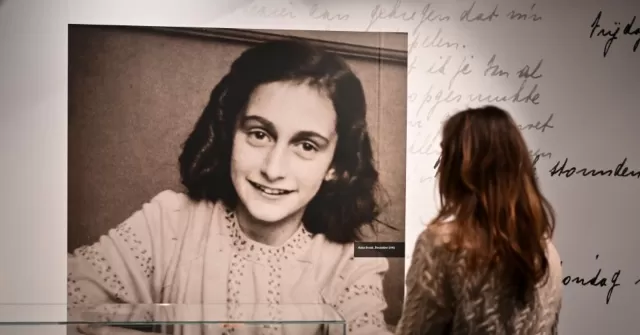
Recently, a controversial statement made by Minnesota Governor Tim Walz has sparked significant backlash from the Washington, D.C.-based Holocaust museum. In a recent interview, Walz compared the actions of U.S. Immigration and Customs Enforcement (ICE) to Nazi Germany, specifically referencing the treatment of Jewish diarist Anne Frank during the Holocaust. The museum has since condemned Walz’s remarks, stating that they trivialize the horrors of the Holocaust and do a disservice to the memory of those who suffered.
In his interview, Governor Walz stated that ICE’s enforcement of immigration laws is similar to the actions of Nazi Germany, where Jews were rounded up and sent to concentration camps. He also compared the fear and uncertainty felt by immigrants to the fear felt by Anne Frank and her family as they went into hiding during the Holocaust. These comments have caused outrage and disbelief, with many calling for an apology from the governor.
The Holocaust Museum, which serves as a memorial to the victims of the Holocaust and educates the public about the dangers of hatred and prejudice, was quick to respond to Walz’s remarks. In a statement, the museum expressed their disappointment and concern over the governor’s comparison, stating that it “trivializes the horrors of the Holocaust and the millions of lives lost.” The museum also highlighted that comparing ICE to Nazi Germany is not only inaccurate, but it also diminishes the severity and impact of the Holocaust.
The museum’s criticism of Governor Walz’s statement is valid and necessary. The Holocaust is a dark period in history that claimed the lives of six million Jews and millions of others who were deemed “undesirable” by the Nazi regime. To compare the actions of ICE, a government agency tasked with enforcing immigration laws, to the systematic genocide of millions is not only offensive but also dangerous. It minimizes the atrocities committed during the Holocaust and undermines the importance of educating future generations about the dangers of prejudice and discrimination.
Anne Frank, whose diary has become a poignant symbol of hope and resilience in the face of oppression, is a significant figure in the Holocaust’s history. Her story has touched the hearts of millions and serves as a reminder of the importance of empathy and compassion towards others. To compare her experiences to those of migrants seeking a better life in the United States is not only insensitive but also disrespectful.
Governor Walz’s comments have also sparked outrage among the Jewish community, who have expressed their disappointment and frustration over the comparison. Rabbi Abraham Cooper, associate dean of the Simon Wiesenthal Center, called the governor’s words a “trivialization of the Holocaust” and stated that “there is no excuse for such ignorance.” The Jewish Community Relations Council of Minnesota and the Dakotas also condemned the governor’s remarks, saying that they were “unacceptable” and “harmful.”
While Governor Walz has since apologized for his comparison, stating that he did not intend to trivialize the Holocaust, the damage has been done. The Holocaust Museum’s response serves as a reminder that we must be careful with our words, especially when discussing such a sensitive and tragic event in history. We must remember the lessons of the past and strive to create a world where such atrocities never happen again.
The comparison made by Governor Walz has sparked an important conversation about the use of language and the impact it can have. It is a reminder that we must choose our words carefully and be mindful of the weight they carry. As we move forward, it is crucial to remember the victims of the Holocaust and honor their memory by actively working towards a world where everyone is treated with dignity and respect.
In conclusion, the Washington, D.C.-based Holocaust Museum’s criticism of Governor Tim Walz’s comparison of ICE to Nazi Germany is valid and necessary. Such remarks trivialize the atrocities committed during the Holocaust and do a disservice to the memory of those who suffered. It is essential to remember the lessons of the past and use our words responsibly to promote unity and understanding in our communities. Let us honor the victims of the Holocaust by working towards a world where love and compassion triumph over hatred and discrimination.


![Complete BritRail Pass Guide [Types, How to Use It, Pros + Cons]](https://inside-news.uk/wp-content/uploads/2025/06/00221EB4-BCA2-4DBB-6CD4-83DBC37D71FA-120x86.webp)