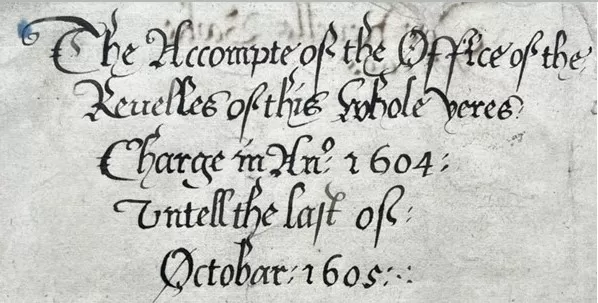
A rare and exciting glimpse into the early days of one of Shakespeare’s most beloved plays, Othello, will be on display at The National Archives from 12 January-5 February. The set of accounts, meticulously kept by James I’s Master of the Revels, Edward Tilney, offers a fascinating insight into the first recorded performance of Othello in the run-up to Christmas 1604.
Tilney’s accounts book, which has been carefully preserved for over four centuries, reveals that “The Moor of Venice” was performed at the Banqueting House in Whitehall. This was a significant venue, as it was the primary location for royal entertainment during the reign of James I. The fact that Othello was chosen to be performed here speaks to its popularity and importance even in its early days.
The accounts book also sheds light on the logistics of putting on a play during this time period. It shows the expenses incurred for the production, including payments to actors, musicians, and stagehands. It also lists the cost of props and costumes, giving us a glimpse into the elaborate and extravagant nature of these performances.
But perhaps the most intriguing aspect of the accounts book is the mention of Shakespeare himself. While we know that Othello was written and performed in 1604, this is one of the few surviving records that directly links Shakespeare to the play. It is a testament to the enduring legacy of the Bard and his timeless works.
The performance of Othello in 1604 was a significant event, not only because it was one of the first recorded performances of the play, but also because it was a reflection of the cultural and political climate of the time. James I had recently ascended to the throne, and his reign marked a shift in English theatre. The King was known for his love of drama and his patronage of the arts, which led to a flourishing of theatre during his reign.
Othello, with its themes of love, jealousy, and betrayal, was a perfect fit for the dramatic tastes of the time. The play was also a reflection of the changing attitudes towards race and ethnicity in England. The character of Othello, a noble and respected general, challenged the prevailing stereotypes of black men at the time and offered a nuanced portrayal of a complex and tragic figure.
The fact that Othello was performed at the Banqueting House, a venue reserved for royal entertainment, also speaks to its significance and popularity. It was not uncommon for the King and his court to attend these performances, and the fact that Othello was chosen for such a prestigious venue is a testament to its quality and appeal.
The accounts book also offers a glimpse into the audience’s reaction to the play. It shows that the performance was well-attended, with a significant amount of money being collected from ticket sales. This is a testament to the enduring popularity of Shakespeare’s works, even in their early days.
The National Archives is delighted to have this rare and valuable piece of history on display for the public to see. It is a unique opportunity to witness the birth of one of Shakespeare’s most iconic plays and to gain a deeper understanding of its cultural and historical significance.
The exhibition will also feature other documents and artifacts related to Othello, providing a comprehensive and immersive experience for visitors. It is a must-see for any Shakespeare enthusiast or anyone interested in the history of English theatre.
In conclusion, the set of accounts from James I’s Master of the Revels, Edward Tilney, offers a fascinating and invaluable insight into the first recorded performance of Othello in 1604. It is a testament to the enduring legacy of Shakespeare and his timeless works, and a reflection of the cultural and political climate of the time. Don’t miss this rare opportunity to see a piece of history come to life at The National Archives.


![Complete BritRail Pass Guide [Types, How to Use It, Pros + Cons]](https://inside-news.uk/wp-content/uploads/2025/06/00221EB4-BCA2-4DBB-6CD4-83DBC37D71FA-120x86.webp)