
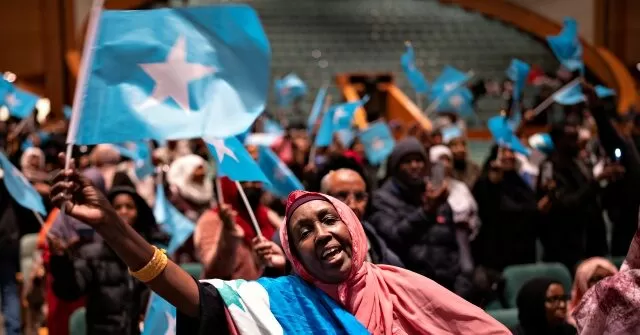
More than 8-in-10 households headed by Somali refugees in the state of Minnesota are on one or more forms of American taxpayer-funded welfare, according to new data published by the Center for Immigration Studies (CIS). This revelation has sparked concern and debate among citizens and policymakers alike, as it highlights the challenges faced by refugees in their journey to rebuild their lives in a new country.
The data, collected from the US Census Bureau’s 2015 American Community Survey, reveals that 82% of Somali-headed households in Minnesota are receiving some form of welfare assistance. This includes cash assistance, food stamps, and Medicaid. The numbers are even more alarming when it comes to households with children, with nearly every Somali household with children relying on welfare. This paints a concerning picture of the economic struggles faced by Somali refugees in Minnesota.
Minnesota has been a popular destination for Somali refugees since the 1990s, with the state being home to the largest Somali population in the United States. The majority of these refugees have fled their war-torn country in search of safety and a better life for their families. However, the reality of starting over in a new country has proven to be a difficult and challenging journey for many.
The high rate of welfare dependence among Somali refugees in Minnesota can be attributed to various factors. Firstly, many of these refugees arrive in the US with limited education and job skills, making it difficult for them to secure employment and support their families. Language barriers and cultural differences also add to the challenges faced by refugees in finding employment. Additionally, the high cost of living in Minnesota, especially in the Twin Cities area where most Somali refugees reside, makes it difficult for them to make ends meet.
Despite these challenges, the Somali community in Minnesota has made significant contributions to the state’s economy and society. Many have started their own businesses, providing employment opportunities for both refugees and non-refugees. They have also enriched the state’s cultural diversity and brought a unique perspective to the community.
However, the high rate of welfare dependence among Somali refugees is a cause for concern and calls for a comprehensive and collaborative approach to address the issue. The CIS report suggests that the federal government should reevaluate its refugee resettlement policies and focus on providing refugees with the necessary skills and resources to become self-sufficient. This includes investing in education and job training programs that can help refugees acquire the skills needed to secure employment.
The state of Minnesota has also taken steps to address the issue. In 2017, the state government launched the “Pathways to Prosperity” program, which aims to provide refugees with the necessary skills and resources to achieve economic self-sufficiency. The program includes English language classes, job training, and financial literacy courses. It also connects refugees with employers and helps them navigate the job market.
It is essential to remember that refugees are not a burden on society, but rather individuals who have faced unimaginable hardships and are seeking a better life for themselves and their families. It is our moral duty to provide them with the support and resources they need to succeed in their new home.
The high rate of welfare dependence among Somali refugees in Minnesota is a complex issue that requires a multifaceted approach. It is crucial for the federal and state governments to work together to address the root causes of this issue and provide refugees with the necessary tools to achieve economic self-sufficiency. At the same time, it is essential for the community to welcome and support refugees, recognizing their contributions and potential.
In conclusion, the CIS data on the high rate of welfare dependence among Somali refugees in Minnesota may be concerning, but it should not overshadow the resilience and determination of these individuals. It is time for us to come together and support our fellow human beings in their journey to rebuild their lives and contribute to our society. Let us not forget that we are all immigrants in this great nation, and it is our diversity that makes us stronger.


![Complete BritRail Pass Guide [Types, How to Use It, Pros + Cons]](https://inside-news.uk/wp-content/uploads/2025/06/00221EB4-BCA2-4DBB-6CD4-83DBC37D71FA-120x86.webp)