
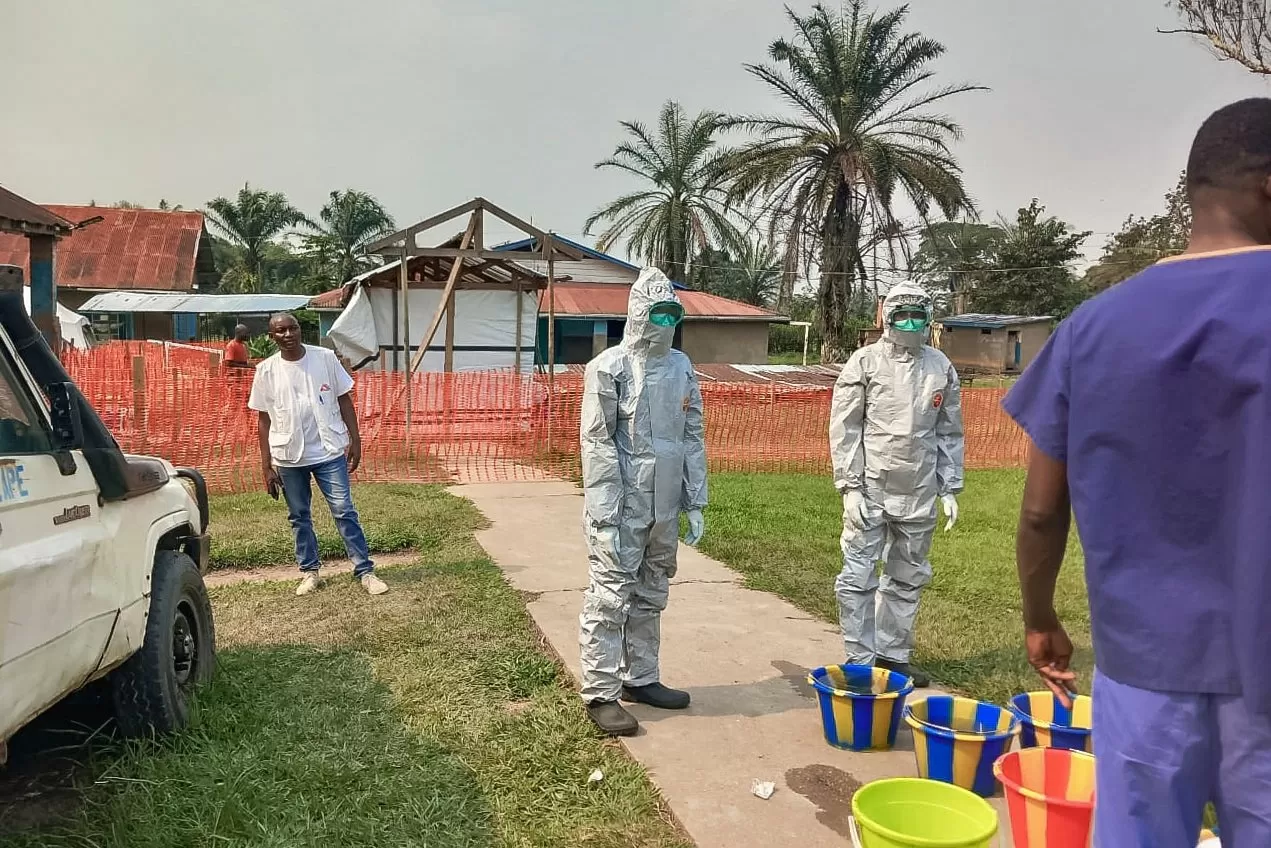
Health authorities in the Democratic Republic of Congo (DRC) are facing a tough challenge as they are once again battling with an Ebola outbreak in the central Kasai province. Despite their best efforts, the virus has already claimed 42 lives out of the 64 reported cases.
This is not the first time the DRC has been hit with the deadly Ebola virus. The country has faced multiple outbreaks since 1976, with the most recent one in 2018 resulting in over 2,200 deaths. The current outbreak, which was declared on June 1st, 2021, has been identified as the Zaire strain of Ebola, the same one responsible for the previous outbreaks.
The Kasai province, which is the epicenter of the current outbreak, is a remote area with limited healthcare infrastructure and resources. This makes it even more challenging for health authorities to contain the spread of the virus and provide adequate medical care to those affected.
However, despite these challenges, the DRC government, along with international organizations, has taken swift action to contain the outbreak. The country has a well-established system in place for responding to Ebola outbreaks, and this has helped in quick identification, isolation, and treatment of cases.
The DRC government has also taken proactive measures to ensure the safety of its citizens and prevent the spread of the virus to other parts of the country. This includes imposing travel restrictions, increasing surveillance at borders, and conducting extensive contact tracing and monitoring.
The World Health Organization (WHO) has also been closely monitoring the situation and providing support to the DRC government. In a statement, Dr. Matshidiso Moeti, the WHO Regional Director for Africa, said, “We are working closely with the government and partners to rapidly expand our response and stop the spread of the virus. WHO has deployed a team of experts to support the response on the ground and is providing technical and logistical support.”
In addition, the DRC government has launched a vaccination campaign in the affected areas to protect healthcare workers and other frontline responders. The vaccine, which has been used in previous outbreaks, has been proven to be safe and effective in preventing the spread of the virus.
However, the success of these efforts depends on the cooperation of the community. In the past, fear and misinformation have hindered the response to Ebola outbreaks in the DRC. This time, health authorities are working closely with community leaders and engaging with the public to raise awareness about the virus and the importance of early detection and seeking medical help.
The DRC is also receiving support from neighboring countries, with Uganda and Rwanda offering assistance in terms of logistics and medical supplies. This regional solidarity is crucial in controlling the outbreak and preventing it from spreading further.
The DRC government has shown its commitment to tackling the Ebola outbreak in the country. However, it is clear that more support and resources are needed to contain the virus and prevent it from becoming a larger humanitarian crisis.
In conclusion, while the resurgent Ebola outbreak in the central Kasai province is a cause for concern, the DRC government, along with its partners, is taking swift and decisive action to contain the virus. With the experience and expertise gained from previous outbreaks, there is hope that this outbreak will be brought under control soon. The country remains resilient in the face of this challenge, and we must all stand in solidarity with the DRC and support their efforts to overcome this health emergency.


![Complete BritRail Pass Guide [Types, How to Use It, Pros + Cons]](https://inside-news.uk/wp-content/uploads/2025/06/00221EB4-BCA2-4DBB-6CD4-83DBC37D71FA-120x86.webp)