
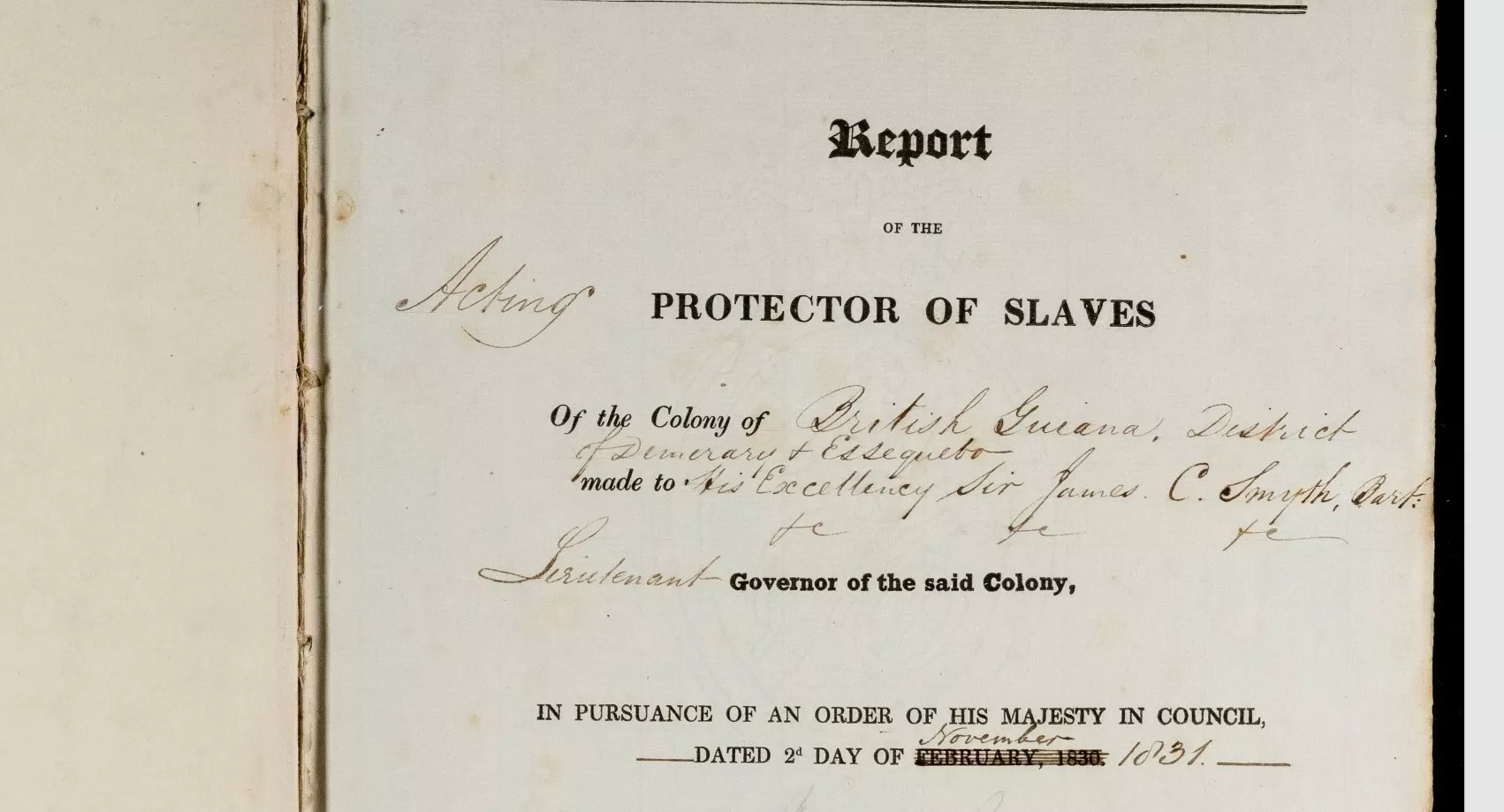
The National Archives, in partnership with international academics, is taking a monumental step towards preserving and sharing the voices of enslaved people from the Caribbean. The Reports of the Protectors of Slaves, the largest collection of first-person testimony of enslaved individuals, will now be accessible to researchers worldwide through the project “Voices in Slavery’s Archive: Law, Place and Testimony in British Guiana.” This initiative aims to digitize and map the reports, shedding light on a dark period in history and giving a platform for these voices to be heard.
The Reports of the Protectors of Slaves, covering the period between 1819-1834, is a collection of over 16,000 depositions, court records, and correspondence from British Guiana (present-day Guyana). These records were created by the British colonial government as a result of an 1819 law that required slave owners to report any mistreatment or violence against their slaves. This groundbreaking law allowed enslaved individuals to testify against their masters, and their voices were recorded in these reports.
For decades, these records were hidden away in the archives, away from the public eye. However, thanks to the efforts of the National Archives and its partners, these documents will now be digitally preserved and made available for anyone to access, anywhere in the world. This initiative not only gives researchers a wealth of information but also pays tribute to the enslaved individuals who bravely denounced their oppressors and fought for their freedom.
The digitization of the Reports of the Protectors of Slaves will make it easier for researchers to access and study these valuable records. It eliminates the need for them to physically visit the National Archives, which can be a significant barrier for those who do not have the resources to travel. With just a few clicks, researchers will have access to a wealth of information, including the names, ages, and occupations of the enslaved individuals, as well as details of their everyday lives and experiences.
Moreover, the project aims to map the locations mentioned in the reports, providing a visual representation of the places where these testimonies were given. This will help researchers gain a deeper understanding of the physical and social landscapes of British Guiana during slavery and how they intersected with the lives of enslaved people.
The British Guiana Reports also carry immense significance for the Caribbean region as a whole. The region has a complex history of slavery, with many countries still struggling to come to terms with its legacy. These reports, which cover the entire period of slavery in British Guiana, are a crucial piece of the puzzle in understanding the full extent and impact of this dark period.
The project “Voices in Slavery’s Archive: Law, Place and Testimony in British Guiana” couldn’t have come at a more opportune time. With the increasing global focus on racial justice and recognition of the Black Lives Matter movement, this initiative serves as a reminder of the atrocities committed against enslaved individuals and their fight for justice. By making these voices available to the world, the National Archives is taking a significant step towards acknowledging and rectifying the wrongs of the past.
The digitization and mapping of the Reports of the Protectors of Slaves also present an excellent opportunity for people of Caribbean descent to connect with their roots. Many individuals in the Caribbean are descendants of enslaved people, and this project could help them gain insight into their ancestors’ lives and struggles. It is a chance to learn about their cultural heritage and celebrate the strength and resilience of their forefathers.
In conclusion, the National Archives and its partners are making commendable efforts to preserve and share the voices of enslaved people through the digitization and mapping of the Reports of the Protectors of Slaves. This project not only provides a vital resource for researchers but also gives a platform for these silenced voices to be heard. It is a significant step towards acknowledging and understanding the impact of slavery and its legacy, and a powerful tool in the fight against racial injustice. As the Reports of the Protectors of Slaves are made accessible to the world, let us listen to these voices and honor the lives of those who fought for their freedom.


![Complete BritRail Pass Guide [Types, How to Use It, Pros + Cons]](https://inside-news.uk/wp-content/uploads/2025/06/00221EB4-BCA2-4DBB-6CD4-83DBC37D71FA-120x86.webp)